

















Hyderabad Property Tax: New Rules Under CURE Bill
Telangana’s CURE Bill, 2026 proposes a new urban governance framework for Hyderabad covering GHMC, Cyberabad and Malkajgiri municipal corporations.
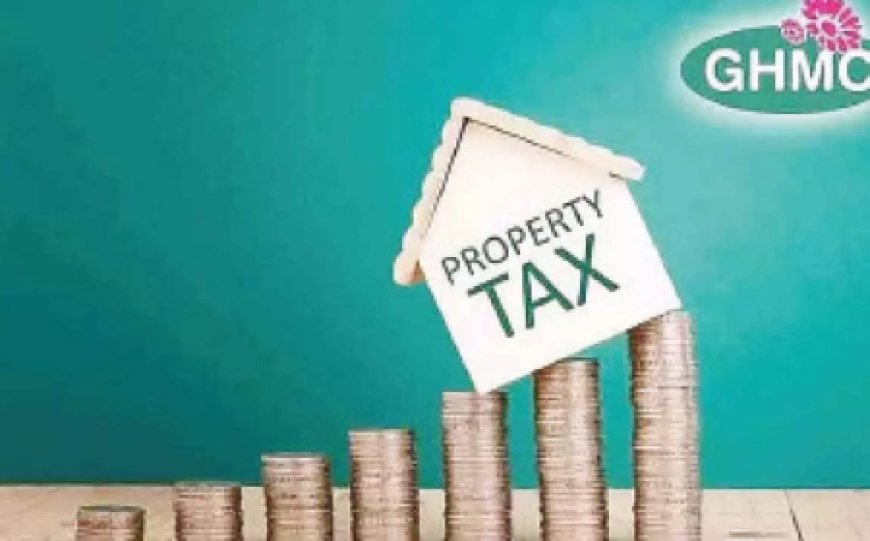
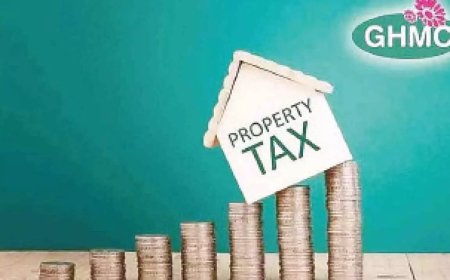
Annual tax increase capped at 10%; capital value-based assessment proposed
REG NEWS, Hyderabad: Telangana has approved the Core Urban Region–Integrated Governance Bill, 2026, marking a major change in the governance framework of Hyderabad. The new system is intended to replace the nearly seven-decade-old GHMC Act, 1955, with an integrated urban governance framework for the city.
The CURE framework covers three municipal corporations — Greater Hyderabad Municipal Corporation (GHMC), Cyberabad Municipal Corporation and Malkajgiri Municipal Corporation. The government says the restructuring is aimed at addressing Hyderabad’s expanding urban area, growing population and increasing infrastructure requirements.
The three-corporation structure was formally notified by the state government earlier this year. The provision attracting considerable attention, however, is the proposed change in property-tax assessment.
20% Proposal Reduced to 10%
The initial draft had proposed allowing property tax to increase by up to 20% annually. Following objections in the Assembly, the maximum limit was reduced to 10%.
The government has clarified that 10% is only the maximum permissible limit and does not mean that property tax will automatically increase by 10% every year. The actual tax applicable to an individual property will depend on the valuation and rules notified for implementation.
From Rental Value to Capital Value
One of the significant proposed changes is the shift from the existing Annual Rental Value (ARV)-based approach towards a capital-value-based assessment. Under the proposed system, factors such as the location of the property and the value of the land and building would play a greater role in determining property tax.
For example, two houses with the same built-up area may not necessarily attract the same tax if they are located in areas with significantly different property values. A 1,000-sq-ft house in Banjara Hills and a similar-sized property in Uppal or an outer suburban area could therefore have different tax assessments under a capital-value-based system.
However, the actual impact on individual property owners will depend on the valuation methodology, area-wise values and detailed implementation rules that are notified.
₹101 Annual Tax for Small Homes
The government has also announced a relief measure for smaller homes. Houses measuring up to 375 sq ft will attract property tax of ₹101 a year. This works out to roughly ₹8.40 a month and is intended to limit the property-tax burden on owners of smaller houses.
Three Corporations, One Urban Framework
The CURE framework is designed to enable coordinated planning and infrastructure management across the three municipal corporations. Issues such as roads, drainage, water supply, traffic management and solid-waste management require coordination beyond individual municipal boundaries.
The government has also been pursuing integrated infrastructure planning across the CURE region. Official government documents identify GHMC, Cyberabad and Malkajgiri as the three municipal corporations forming the CURE structure.
Digital Billing and Payments
The new framework also envisages integrated digital billing and payment systems for property tax and other civic services. The objective is to make municipal payments and citizen services more integrated and digitally accessible.
What Property Owners Need to Know
The passage of the new law does not immediately provide a uniform revised tax figure for every residential or commercial property. The final impact will depend on capital-value determination, location-wise valuations, notifications and implementation rules.
For property owners, three changes are particularly important:
1. The proposed shift from rental-value-based assessment to capital-value-based assessment.
2. The maximum annual increase has been reduced from the proposed 20% to 10%.
3. Houses up to 375 sq ft will have an annual property tax of ₹101.
The CURE framework therefore represents not only a change in Hyderabad’s urban governance structure but also a proposed shift in the way property taxation is assessed. The actual tax liability for india
What's Your Reaction?
 Like
0
Like
0
 Dislike
0
Dislike
0
 Love
0
Love
0
 Funny
0
Funny
0
 Angry
0
Angry
0
 Sad
0
Sad
0
 Wow
0
Wow
0