


















Japan's Bio-Lace Technology Shows Promise in Hyderabad Pilot, Offering New Model for Urban Wastewater Treatment
The Japanese pilot demonstrates how compact, low-energy treatment systems could reshape wastewater infrastructure in rapidly growing cities.
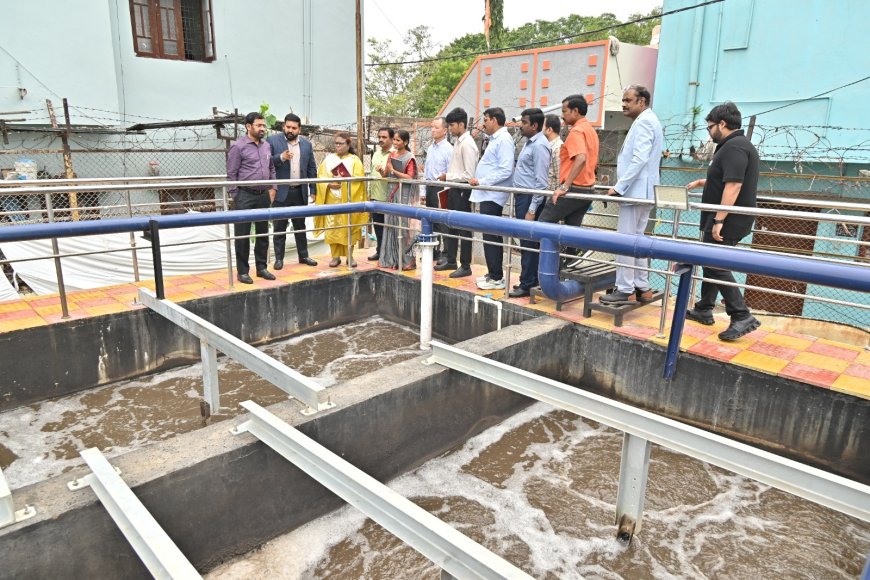
Hyderabad has successfully demonstrated India's first pilot project using Japan's advanced Bio-Lace technology for treating polluted nala water, with the 1 MLD trial recording 90 per cent reduction in Biochemical Oxygen Demand (BOD) and 85 per cent reduction in Total Suspended Solids (TSS). The results are expected to support the city's long-term wastewater management strategy, offering a compact, energy-efficient alternative to conventional sewage treatment systems as Hyderabad continues to expand.
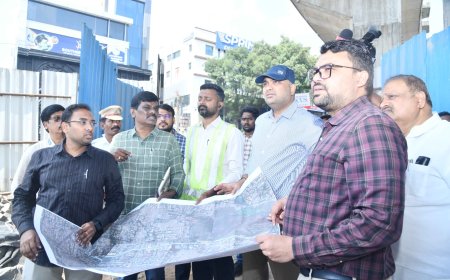
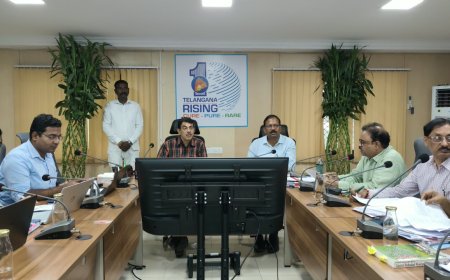
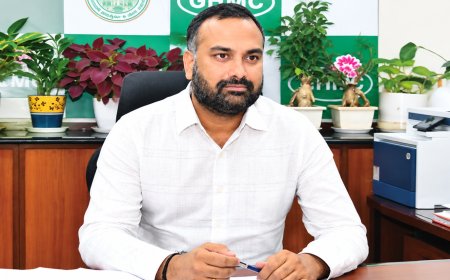
The pilot project, set up at the Hyderabad Metropolitan Water Supply and Sewerage Board's (HMWSSB) Sewage Treatment Plant (STP) in Fatehnagar, was reviewed by HMWSSB Managing Director K. Ashok Reddy along with representatives of the Japan International Cooperation Agency (JICA), Japan-based TBR Corporation, and senior HMWSSB officials.
Implemented under a Memorandum of Understanding (MoU) between HMWSSB, JICA and TBR Corporation, the project is the first in the country to experimentally deploy the internationally recognised Bio-Lace technology for treating flowing polluted nala water.
Ashok Reddy said the technology, which has already been used to restore more than 400 rivers and waterways in Japan, has produced encouraging results in Hyderabad and could offer an effective and environmentally friendly solution for controlling pollution in urban drains.
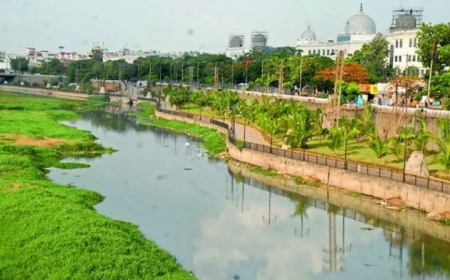
He also noted that HMWSSB is working towards the State Government's goal of ensuring 100 per cent treatment of sewage generated within Hyderabad before discharge, ensuring that no untreated wastewater enters the Musi River.
Currently, the pilot unit treats sewage through a pumping system, while the feasibility of deploying the technology directly in flowing nalas and streams is being examined. Officials have also been asked to study the pilot results and assess the possibility of expanding the technology to other parts of the city.
According to water board officials, compared to conventional sewage treatment plants, the Bio-Lace system requires 70-85 per cent less land, delivers more than 50 per cent energy savings, operates without chemicals by using naturally occurring microorganisms, reduces maintenance costs, and significantly lowers sludge generation.
Representatives of TBR Corporation stated that the pilot reduced foul odour, improved dissolved oxygen levels, and enhanced the quality of water flowing into the Musi River, lakes and other water bodies. They added that, following evaluation by the Pollution Control Board, the technology could be considered for adoption in future sewage treatment plants planned across Hyderabad.
What's Your Reaction?
 Like
0
Like
0
 Dislike
0
Dislike
0
 Love
0
Love
0
 Funny
0
Funny
0
 Angry
0
Angry
0
 Sad
0
Sad
0
 Wow
0
Wow
0