




Customisation & Creativity Beyond Trends: Architect Ravi Kumar Bathula
The architect explains how functionality, creativity, customisation and sustainability shape spaces that remain relevant beyond changing trends.
SAMUEL JOSHUA
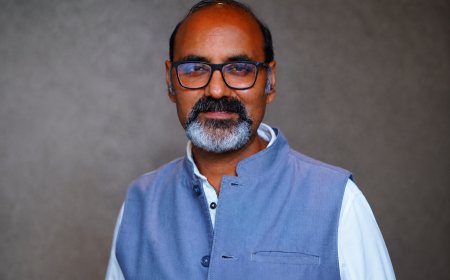
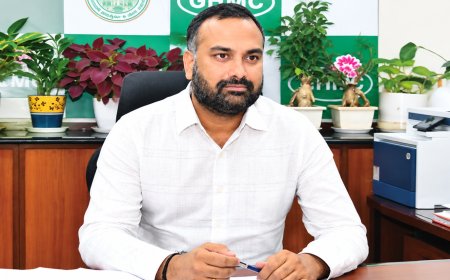
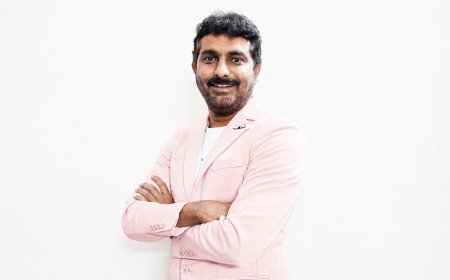
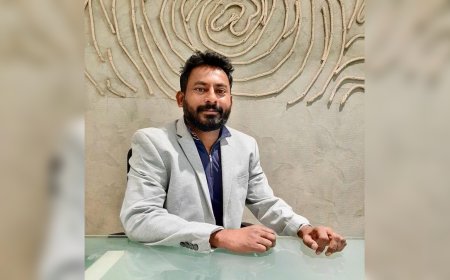
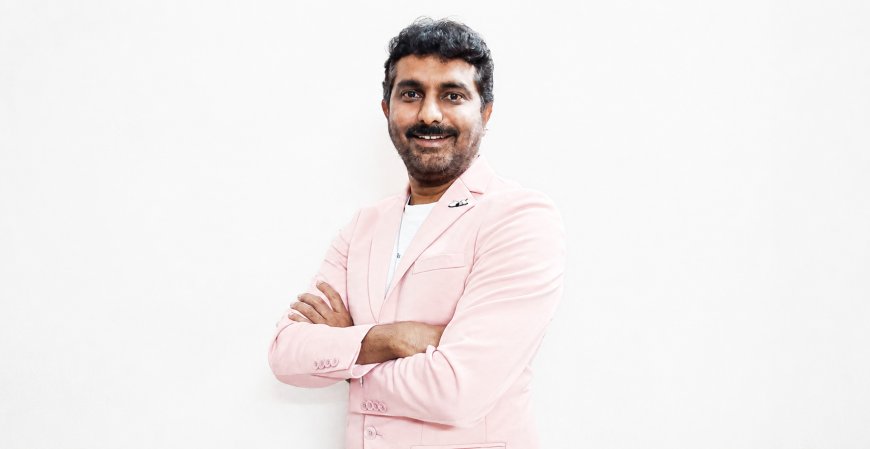
Architecture is not limited to the appearance of a building. It is about understanding how people live, work and experience a space, while ensuring that every element has a purpose and contributes to the way the building functions. For architect Ravi Kumar Bathula, this approach has shaped more than 25 years of practice, with customisation, sustainability and practical design forming an important part of his work. At the heart of his philosophy is a simple belief: “Architecture is the king of all arts.”
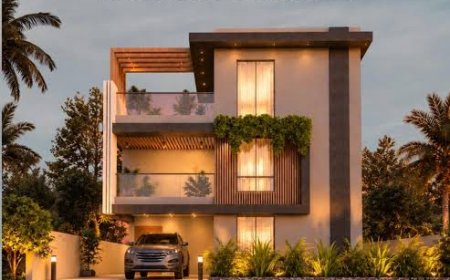
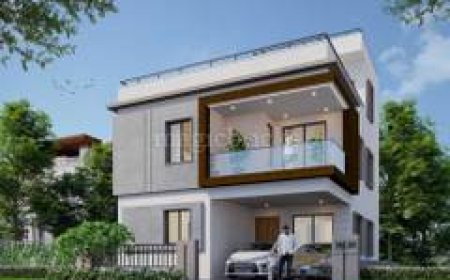
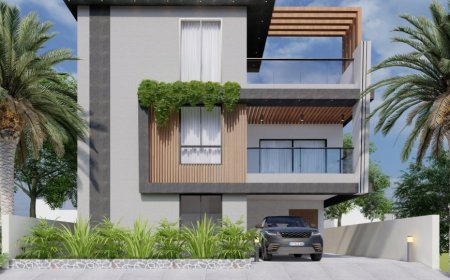
A Master of Architecture in Construction Management from CSIIT-Secunderabad, JNA & FAU, Hyderabad, Ravi started his own practice in 2000 and now operates from his studio at Jubilee Hills. His firms, Ravi Consultants and The Design, handle a wide range of projects, including hospitals, independent bungalows, commercial buildings, schools, colleges and institutional developments. Over the years, his practice has remained diverse, allowing him to work across different building types rather than focus on a single segment.
For Ravi, “Life is an architecture and architecture is the mirror of life.” This idea is reflected in one of his recent projects, a 50,000-sq-ft real estate office that he describes as the biggest real estate office in India. The project took nearly four years to complete, with customised elements sourced from China. Designed to attract both buyers and investors, the office features a 30-ft single-piece main door without a joint and a 30-ft single-piece glass installation. The door uses aluminium framing, plywood and veneer, with a customised 12-ft handle.
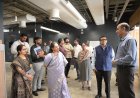
The office also features digital flooring, customised marketing cabins for customer privacy and a 6,000-sq-ft MD cabin. The entire floor spans 18,000 to 20,000 sq ft, with conference and waiting areas, sports and party spaces, and an infinity swimming pool. The project has also drawn architects for site visits and case studies.
Straight lines, in his view, never go out of style. Ravi’s design approach centres on simplicity and clean forms that remain relevant beyond changing trends. Frank Lloyd Wright is among his major influences, particularly his approach to organic architecture and the relationship between buildings and nature. Wright’s Fallingwater remains an enduring reference for him, while I.M. Pei is another architect he admires. Ravi also prefers customised solutions, working with R&D teams to develop elements specific to each project.
Function comes first in Ravi’s designs, followed by the “wow factor”. He is also working on a sustainable school in Jalgaon, Maharashtra, using an RCC structure and locally manufactured hollow bricks to reduce the need for sand, cement, curing and painting. About 50 per cent complete, the project is expected to lower indoor temperatures by 2 to 5 degrees.
His portfolio includes KIMS Hospital and KIMS Cancer Hospital in Amaravati, Suraksha Children and Women Hospital and Asha Psychiatric Hospital in Hyderabad. He also designed the IICT silver jubilee monument and Sanjeevani Ayurvedic Hospital in Moinabad, based on an eco-friendly village concept. His ongoing work includes a 20,000-sq-ft villa, school and commercial project in Maharashtra and a villa project for a Malaysian company making its first investment in India.
Technology supports Ravi’s work, but human judgement remains central. He says 90% of the design process relies on human thinking, while technology accounts for about 10%, mainly for presentations. He uses rendering tools but remains cautious about AI-generated designs, which may not always suit practical site requirements.
Looking ahead, Ravi believes architecture should play a wider role in shaping communities, supporting culture and tourism while meeting practical needs. He sees greater collaboration between architects and government as important to developing buildings and cities that reflect Indian needs and standards.
What's Your Reaction?
 Like
0
Like
0
 Dislike
0
Dislike
0
 Love
0
Love
0
 Funny
0
Funny
0
 Angry
0
Angry
0
 Sad
0
Sad
0
 Wow
0
Wow
0