



















Telangana Govt Approves CURE-1 Rollout for Unified Property Tax, Utility and Traffic Payments
Telangana clears a unified digital payment platform to consolidate civic and utility transactions under a single system aimed at improving efficiency, transparency and service delivery.
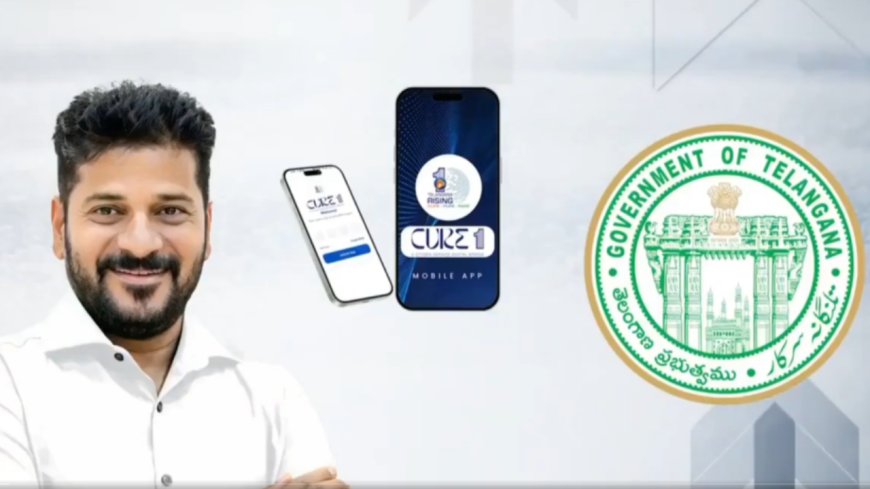
The Telangana government has approved the rollout of CURE-1 (Common Unified Billing and Collection System), a unified digital payment platform that will integrate multiple government dues, including property tax, electricity bills, water charges and traffic challans, under a single payment interface across the CURE region. The approval, issued through G.O. Rt. No. 627 dated June 19, 2026, aims to replace fragmented payment systems with a common digital ecosystem, improving citizen convenience while enhancing transparency and revenue collection.
The platform will initially cover the Greater Hyderabad Municipal Corporation (GHMC), Cyberabad Municipal Corporation (CMC) and Malkajgiri Municipal Corporation (MMC). It will integrate municipal payments such as property tax, trade licence fees, self-assessment charges, superstructure fees and Vacant Land Tax (VLT).
Citizens will also be able to pay Telangana Southern Power Distribution Company Ltd (TGSPDCL) electricity bills, Hyderabad Metropolitan Water Supply and Sewerage Board (HMWSSB) water and sewerage charges, and Hyderabad Traffic Police challans through the Centralised Challan Management System (CCMS). The framework also allows for future integration of additional government services.
As per the order, the Centre for Good Governance (CGG) has been entrusted with developing, deploying and maintaining the CURE-1 platform, while ESD MeeSeva will act as the nodal agency responsible for implementation, payment gateway integration and coordination with participating departments. The platform will feature integrated billing, API-based interoperability, real-time dashboards, automated reconciliation, audit trails, cybersecurity safeguards, disaster recovery systems and role-based access controls in line with CERT-In, MeitY and RBI guidelines.
Participating departments have been directed to provide secure APIs, enable real-time payment updates, nominate dedicated nodal officers, integrate their ERP and backend systems, and support testing and deployment. All citizen payments will be routed through the integrated MeeSeva Payment Gateway, with department-wise settlements targeted on a T+0 or T+1 basis, supported by automated reconciliation and centralised monitoring.
The government also plans a statewide awareness campaign through WhatsApp, SMS, email, departmental portals, social media and MeeSeva centres to drive adoption. A centralised grievance redressal mechanism and MIS dashboards will enable real-time complaint resolution, payment monitoring, analytics and exception reporting.
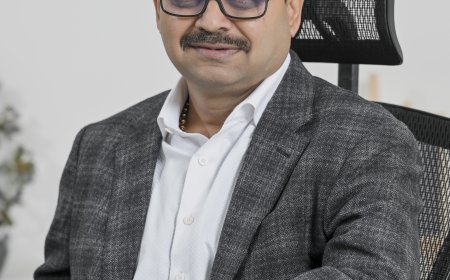
To oversee implementation, the government has constituted a high-level Steering Committee chaired by Jayesh Ranjan, Special Chief Secretary, Municipal Administration and Urban Development (MA&UD) Department. The committee will supervise implementation, interoperability, cybersecurity and future service integration. All participating departments have been directed to migrate to the CURE-1 payment ecosystem and phase out standalone payment systems within 90 days of the government order.
What's Your Reaction?
 Like
0
Like
0
 Dislike
0
Dislike
0
 Love
0
Love
0
 Funny
0
Funny
0
 Angry
0
Angry
0
 Sad
0
Sad
0
 Wow
0
Wow
0