













Telangana’s CURE-2026 Bill Aims to Overhaul Urban Governance in Hyderabad
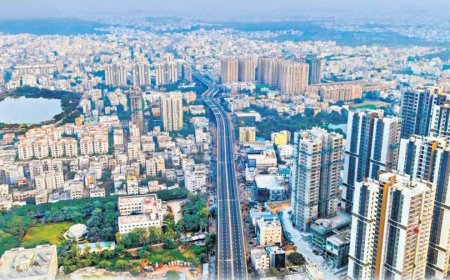
The Telangana government has released the draft CURE (Core Urban Region Economy) – Integrated Governance Bill, 2026, proposing a comprehensive overhaul of urban governance in the Hyderabad Metropolitan Region.

The Telangana government has released the draft Telangana Core Urban Region Economy (CURE) – Integrated Governance Bill, 2026, setting the stage for a major restructuring of urban governance in the Hyderabad Metropolitan Region.
The proposed legislation seeks to replace the existing GHMC Act with a single unified framework for the Greater Hyderabad Municipal Corporation (GHMC), Medchal Municipal Corporation and Charminar Municipal Corporation. Spanning 43 chapters and nine schedules, the draft Bill covers municipal administration, urban planning, taxation, public services, infrastructure development and environmental management.
The government has invited suggestions and objections from citizens, urban planning experts, industry stakeholders and Resident Welfare Associations (RWAs) until July 24
Capital Value-Based Property Tax Proposed
One of the most significant proposals in the draft Bill is the shift from the current Annual Rental Value (ARV) system to a capital value-based property tax model. Under the new framework, property tax would be calculated on the basis of the government registration value of land and buildings in each locality. Residential properties may be taxed at annual rates ranging from 0.10% to 0.50% of capital value, while commercial properties could attract tax in the range of 0.20% to 2%.
If implemented, the new system is expected to increase tax liabilities in several older GHMC areas where property values have risen sharply over the years. The Bill also proposes a Unique Property Identification Number (UPIN) for every property and a self-assessment mechanism. Octroi and dog taxes are proposed to be abolished, while incentives may be introduced for timely payment of property tax.
Faster Building and Layout Approvals
The draft legislation also aims to reduce delays in granting building and layout permissions by introducing a structured escalation process. If an application is not processed within the prescribed time limit, it will automatically move to the next higher authority. If no decision is taken there either, the applicant may issue a seven-day notice to the Commissioner, after which deemed approval will come into effect. However, deemed approval will not apply to projects involving lakes, Full Tank Level (FTL) areas, buffer zones, government land or prohibited properties.
Stricter Action Against Illegal Constructions
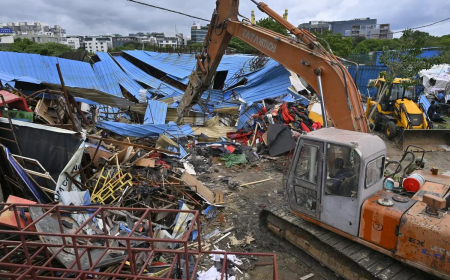
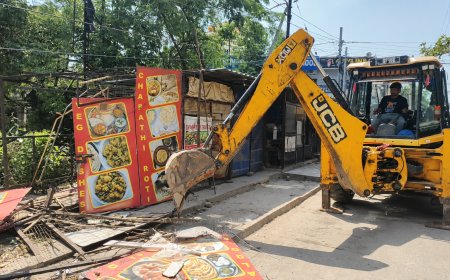
The Bill proposes stronger powers for municipal commissioners to act against unauthorised constructions. Buildings raised without approval can be sealed after a 24-hour notice. In cases where public safety is at risk, authorities may take immediate action without prior notice.
The draft also states that electricity and drinking water connections should not be provided to buildings without an Occupancy Certificate (OC), placing responsibility on utility agencies to ensure compliance.
Single Trade Licence and Unified Utility Bill
To simplify business operations, the government has proposed a single integrated trade licence, eliminating the need for multiple approvals from different departments. The Bill also introduces a Single Utility Bill, which would allow citizens and businesses to make consolidated payments for municipal taxes, electricity charges, water bills, sewerage charges and even traffic challans through one platform.
Hyderabad’s 24-Hour Economy Vision
As part of its broader plan to position Hyderabad as a global economic hub, the government intends to create Night Economy Zones. Businesses and commercial establishments in designated areas would be allowed to operate round the clock, encouraging economic activity beyond regular business hours.
One Digital Portal for Civic Services
The CURE framework proposes a unified digital platform for all municipal services, including approvals, grievance redressal, tax payments, emergency services and citizen applications. A dedicated CURE Appellate Authority will also be established to handle complaints and appeals related to civic services.
Dedicated Food Safety Committee
For the first time, the proposed legislation includes a separate chapter on food safety and nutrition. A high-level committee chaired by the Principal Secretary, Municipal Administration, with the Food Safety Commissioner as Convenor, will oversee food quality, hygiene standards and preventive measures against food poisoning incidents across the urban region.
Strong Focus on Environment, Traffic and Disaster Management
The draft Bill places considerable emphasis on sustainable urban development. It includes provisions for climate action planning, lake conservation, scientific management of construction waste, wastewater recycling, electric vehicle charging infrastructure, public transport improvement, traffic management and disaster preparedness.
The government also proposes giving statutory status to HYDRAA, assigning it responsibility for protecting lakes, canals and government lands from encroachments.
Apex Governance Council Under Chief Minister
To improve coordination among multiple departments operating in the metropolitan region, the Bill proposes the creation of the CURE Apex Governance Council, to be chaired by the Chief Minister. Other proposed institutions include a Smart Governance Centre, Road Safety Authority, Utility Coordination Committee and dedicated welfare mechanisms for unorganised workers and gig economy employees.
Key Highlights of the CURE Bill 2026
- Unified legislation covering GHMC, Medchal and Charminar Municipal Corporations.
- Capital value-based property tax system.
- Residential property tax between 0.10% and 0.50%; commercial properties between 0.20% and 2%.
- Unique Property Identification Number (UPIN) for every property.
- Single integrated trade licence.
- Single utility bill covering multiple civic payments.
- Deemed approval mechanism for eligible building permissions.
- Night Economy Zones for round-the-clock business operations.
- Stronger enforcement powers against illegal constructions.
- Unified digital portal for all civic services.
- Dedicated systems for environmental protection, food safety, traffic management and disaster response.
What's Your Reaction?
 Like
0
Like
0
 Dislike
0
Dislike
0
 Love
0
Love
0
 Funny
0
Funny
0
 Angry
0
Angry
0
 Sad
0
Sad
0
 Wow
0
Wow
0