





















HILT set to trigger Hyd’s biggest redevelopment
9,292-acre land transformation plan could redefine industrial corridors, unlock urban growth and push industries toward clusters beyond ORR

SAMUEL JOSHUA
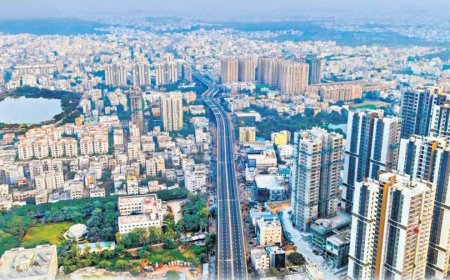
The Telangana government’s Hyderabad Industrial Lands Transformation (HILT) policy is emerging as one of the most significant urban land reform initiatives in Hyderabad’s recent history, with the potential to simultaneously reshape the city’s urban landscape and give ageing industrial sectors a second phase of growth outside the city limits.
With detailed operational guidelines now officially released through G.O. Ms. No. 18 dated May 22, 2026, the policy has moved from concept stage into implementation mode, bringing clarity on how nearly 9,292 acres of industrial land within and around Hyderabad’s core urban region could gradually be transformed into modern mixed-use urban corridors.
Industrial lands set for second life
As Hyderabad expanded vertically and outward, increasing concerns emerged around pollution, heavy vehicle movement, congestion and environmental stress in these corridors.
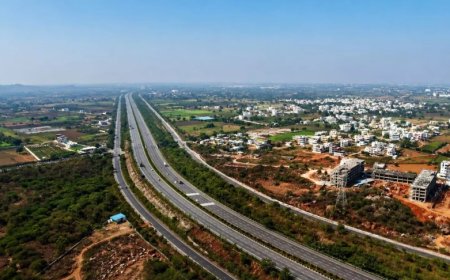
Urban planners believe the HILT policy could now become Hyderabad’s largest urban restructuring exercise by unlocking strategically located industrial land parcels for planned redevelopment while simultaneously enabling industries to modernise and relocate into larger, cleaner and infrastructure-ready industrial zones outside the ORR.
9,292 acres open for transformation
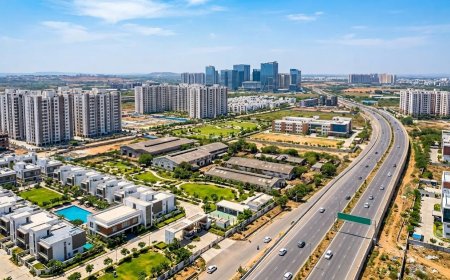
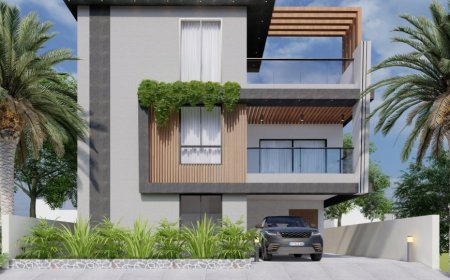
Under the policy, several ageing industrial lands could gradually be redeveloped into mixed-use urban ecosystems supporting residential, commercial and institutional growth.
From factories to mixed-use urban hubs
Industry observers believe future projects across these corridors may include IT parks, business districts, luxury residential developments, commercial towers, educational institutions, healthcare facilities, startup hubs and integrated urban townships.
One of the policy’s most significant features is its attempt to create a self-sustaining urban infrastructure funding model through the Development Impact Fee (DIF) framework.
Under the mechanism, landowners seeking land-use conversion will pay DIF charges linked to land extent, while 25% of collections, after deduction of processing fees, will be reinvested into future infrastructure and public amenities.
To speed up approvals, the government has also directed HMDA and the MA&UD Department to update Master Plan records within three days of issuing change-of-land-use approvals.
Entire industrial layouts are proposed to be notified for re-zoning together instead of processing individual plots separately, a move expected to accelerate large-scale redevelopment.
Industries to move beyond ORR
At the same time, the policy is designed not merely as an urban redevelopment mechanism but also as an industrial transition strategy.
From factories to mixed-use urban hubs
Industries shifting beyond the ORR are expected to receive priority allotment in industrial parks while continuing to retain existing incentives and subsidies. Approved units will also be allowed to continue operations at existing locations for up to one year after receiving conversion approvals.
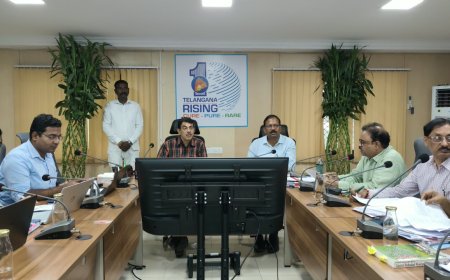
Industries minister Duddilla Sridhar Babu has already initiated discussions with industrial stakeholders regarding relocation planning and implementation mechanisms.
The government is also expected to launch dedicated online systems and grievance redressal platforms to improve transparency and application tracking.
Industry sources indicate that preliminary land aggregation activity, redevelopment discussions and joint venture negotiations have started gaining momentum across several old industrial belts.
Real estate experts believe the policy could significantly alter land valuation patterns within Hyderabad’s core urban region over the next decade.
However, experts also caution that successful implementation will depend heavily on execution quality, infrastructure planning, environmental clearances and handling of land ownership complexities.
Still, if executed effectively, the HILT policy could redefine Hyderabad’s next phase of growth by simultaneously modernising the city core and creating a new generation of industrial ecosystems beyond the ORR.
• Nearly 9,292 acres identified for transformation.
• 21 industrial parks targeted under policy.
• Major focus on Jeedimetla, Nacharam, Uppal and Balanagar.
• Mixed-use redevelopment permitted within core urban zones.
• Industries to gradually shift beyond ORR.
• Incentives and relocation support planned for industries.
• DIF model introduced to fund future infrastructure.
• Policy could reshape Hyderabad’s long-term urban growth map.
What's Your Reaction?
 Like
0
Like
0
 Dislike
0
Dislike
0
 Love
0
Love
0
 Funny
0
Funny
0
 Angry
0
Angry
0
 Sad
0
Sad
0
 Wow
0
Wow
0