


















Gated community maintenance becomes a flashpoint
Maintenance is becoming a growing issue in Hyderabad’s large gated communities, with CAM charges, sinking funds, common-area upkeep and developer-to-association handovers often leading to disputes.

CAM charges, sinking funds and handover issues trigger resident disputes
PROPERTY PULSE
As gated communities grow larger and more complex, maintenance is emerging as a significant long-term issue for residents, developers and facility managers. Monthly common area maintenance (CAM) charges, sinking funds, clubhouse operations, security, lifts, water systems, landscaping and other shared facilities involve substantial recurring expenditure. Disputes can arise when residents question the basis of charges, the quality of services or the way common funds are being managed.
WHEN MAINTENANCE BECOMES A DISPUTE
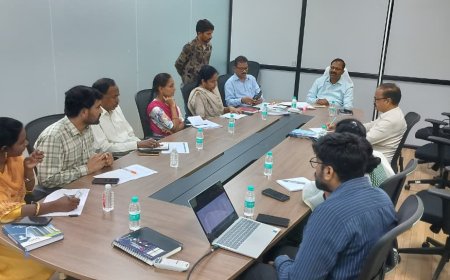
The issue becomes particularly sensitive when responsibility for maintenance shifts from the developer or its appointed facility manager to a residents’ association. At this stage, residents typically seek details of outstanding works, maintenance contracts, staff and agency costs, utility expenses, sinking-fund balances and other financial commitments. Developers, meanwhile, have to continue maintaining essential services until the association takes over in accordance with the applicable framework. Recent disputes in large housing communities, including a reported disagreement in Noida over a sharp increase in CAM charges, have brought the issue of maintenance costs and transparency into focus. The debate is not only about whether a particular charge is high or low. Residents also want to understand how charges are calculated, what services they cover, whether expenditure is supported by records and how accumulated funds are being utilised.
THE HANDOVER QUESTION
The Real Estate (Regulation and Development) Act, 2016 provides a framework for several of these responsibilities. Section 11(4)(d) requires the promoter to provide and maintain essential services on reasonable charges until the association of allottees takes over. Section 11(4)(e) deals with facilitating formation of the association. Section 17 addresses transfer of title and documents relating to common areas, while Section 19 sets out the allottee’s obligations, including payment of maintenance and other applicable charges. The practical challenge is that maintenance responsibilities can continue for years after possession begins.
A large project may have hundreds or thousands of occupied homes while construction, amenity completion and common-area works are still progressing. This can create disagreements over which expenses should be borne by the developer, which should be recovered through CAM and when a facility is considered ready for association management. A proper transition therefore involves more than handing over keys or management rights. Records of assets, service contracts, warranties, pending works, staff arrangements, utility connections and financial balances can all become important when an association assumes responsibility.
A GROWING HYDERABAD ISSUE
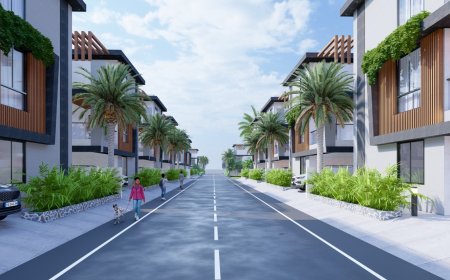
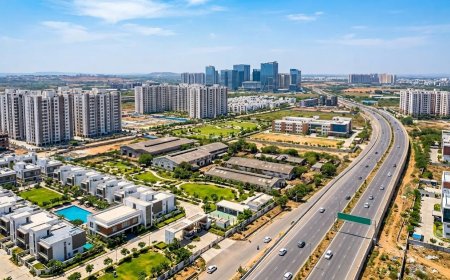
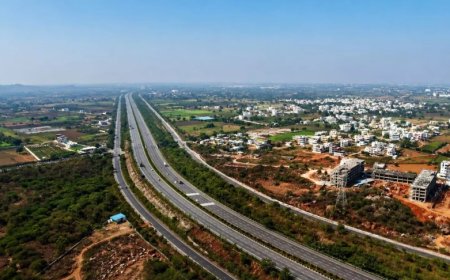
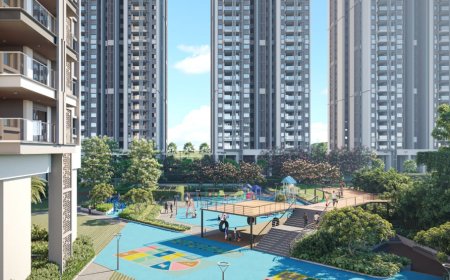
For Hyderabad’s expanding gated-community belts in Kokapet, Neopolis, Narsingi, Financial District, Gachibowli, Tellapur, Kondapur and Miyapur, the issue is becoming increasingly relevant. Large projects operate almost like small townships, with internal roads, security systems, sewage and water infrastructure, clubhouses, swimming pools, landscaped areas, lifts, power-backup systems and other shared facilities. Their maintenance requires professional management and substantial recurring expenditure.
The Balaji Elegancia matter before TG-RERA illustrates how disputes can extend beyond monthly maintenance charges to the completion and upkeep of common facilities. In its May 4, 2026 order, the authority directed the developer to complete pending works within the stipulated period. For residents, transparency is therefore as important as the amount being collected. Associations taking over maintenance need access to expenditure statements, vendor agreements, staff and agency costs, utility bills, asset inventories and details of sinking-fund balances. They also need clarity on pending works and obligations that remain with the developer.
For developers and facility managers, a clearly documented transition can reduce future disputes. For residents, an association with proper records, budgeting and oversight can provide greater accountability once it assumes responsibility. As Hyderabad’s gated communities become larger and more sophisticated, maintenance is no longer simply a monthly expense. The quality of the handover, clarity of responsibilities and transparency in financial management can have a direct bearing on how a community functions over the long term.
COMMUNITY COSTS MAINTENANCE.
- CAM charges and sinking funds.
- Developer-to-association handover.
- Common-area and amenity upkeep.
- Vendor contracts and expenditure.
- Utility and facility-management costs.
- Transparency in fund utilisation.
- Pending works and handover records.
- Resident association oversight.
What's Your Reaction?
 Like
0
Like
0
 Dislike
0
Dislike
0
 Love
0
Love
0
 Funny
0
Funny
0
 Angry
0
Angry
0
 Sad
0
Sad
0
 Wow
0
Wow
0