

























Realty shifts from speculation to value
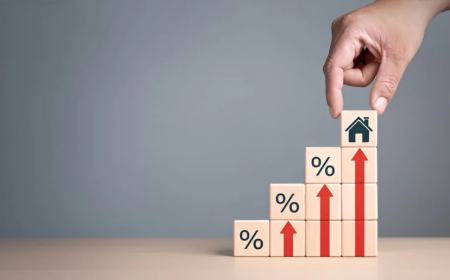
India’s real estate market is shifting from speculation-driven buying to value-based decisions.

Buyers increasingly assess price, demand and fundamentals before investing
Property Pulse
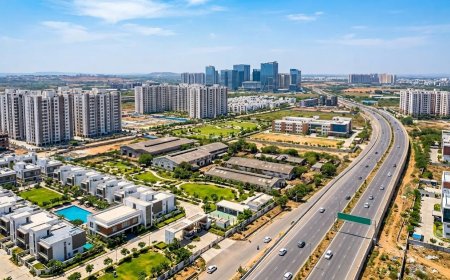
The real estate market is gradually moving away from the belief that a property can deliver quick gains simply because a new road, metro line, major project or other development has been announced nearby.
Buyers are increasingly questioning whether the property offers value at the quoted price, rather than assuming that prices will continue to rise.
Across India’s top seven cities, residential price growth moderated to around 8 per cent between 2024 and 2025. As appreciation becomes less automatic, investors are paying greater attention to the fundamentals supporting a property’s value.
Hyderabad illustrates the changing approach. The city recorded around 12,400 housing sales in Q1 2026, up 23 per cent year-on-year, indicating that demand remains firm.
Around 19,300 new residential units entered the market during the quarter, an increase of 46 per cent quarter-on-quarter and 87 per cent year-on-year.
Instead of relying only on future appreciation, they are increasingly examining employment hubs, transport links, education and healthcare facilities, project-level demand and the track record of developers.
Hyderabad’s available residential inventory stood at around 26 months in Q1 2026. While this was higher than a year earlier, inventory remained stable on a quarterly basis.
Across the top seven cities, new housing supply in Q1 2026 exceeded sales, taking available inventory to approximately 6.01 lakh units. Average residential prices, meanwhile, increased by around 7 per cent year-on-year.
For buyers, higher inventory can mean more scope to compare projects, negotiate and assess whether quoted prices are supported by actual market conditions.
However, buyers are increasingly looking for evidence behind such claims.
The approach is particularly relevant to land and plot purchases. A proposed road, metro line or large project may eventually influence values, but buyers need to establish ownership, layout approvals, zoning, road access, surrounding development and actual transactions before assigning a premium.
The shift does not mean buyers have lost interest in premium or high-value housing. Instead, purchasing decisions are becoming more selective, with location, product quality, developer credibility and price increasingly determining whether a project can command a premium.
The broader change is from buying on expectation to buying on evidence. For both homes and investments, the key question is increasingly not simply how much the property could appreciate, but whether its current price is supported by its underlying value.
BUYER VALUE
- 12,400 housing sales in Q1 2026
- 23% YoY sales growth
- 19,300 new units added
- 87% YoY supply growth
- 26 months inventory
- 6.01 lakh units across top seven cities
What's Your Reaction?
 Like
0
Like
0
 Dislike
0
Dislike
0
 Love
0
Love
0
 Funny
0
Funny
0
 Angry
0
Angry
0
 Sad
0
Sad
0
 Wow
0
Wow
0