






















RWA handover does not end builder obligations

Apartment handover to a Residents’ Welfare Association (RWA) does not automatically end the builder’s obligations.
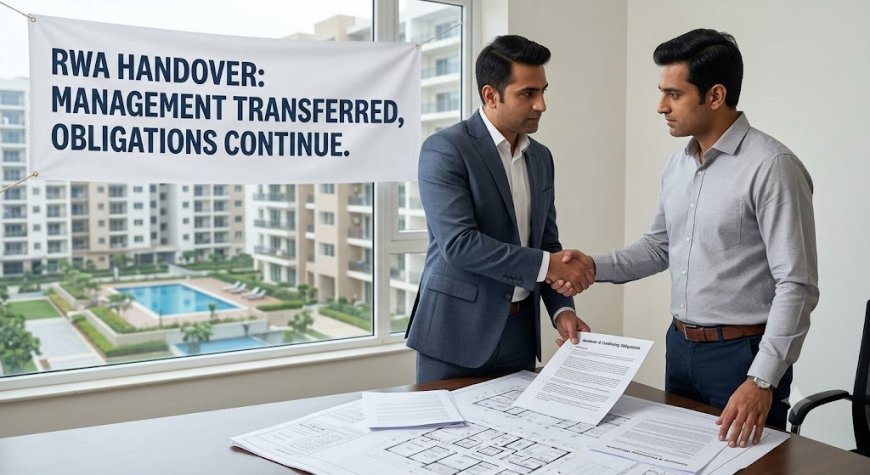
RWA handover does not end builder obligations
rwa-handover-does-not-end-builder-obligations

Handover changes management, not necessarily builder liabilities

Property Pulse

A builder may hand over an apartment complex to a residents' association, after which the RWA takes charge of maintenance, security and other day-to-day operations. But the handover does not automatically transfer every builder obligation to the association. Once an RWA takes over, its responsibilities generally include maintaining common areas, security and housekeeping, landscaping, lifts and equipment, common electricity and water services, maintenance collections, accounts, society rules and service providers.

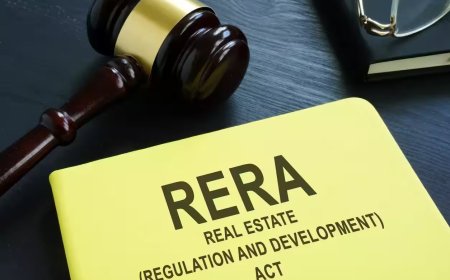
These operational responsibilities are different from obligations that may continue to rest with the promoter under RERA, the sale agreement, project documents or other applicable law. Depending on the facts and documents, matters such as pending construction, promised amenities, statutory or project documentation, conveyance and common-area transfer, and defects attributable to the promoter may continue to require action from the builder.

Before accepting final handover, the association should maintain a clear record of what has actually been transferred and what remains outstanding. The handover record should cover occupancy or completion documents, approved plans, common-area details, fire-safety records, lift documents, STP and WTP systems, electrical installations, equipment warranties, asset inventory, maintenance contracts, corpus funds, vendor agreements, pending works, defect complaints and relevant financial statements.

The association should distinguish between assets and responsibilities that it has accepted and matters that remain pending with the promoter. RERA provides for the formation of an association of allottees and for conveyance in accordance with the applicable provisions and rules. The precise obligations of a promoter and association depend on the project, its stage, the documents and the applicable law. The common mistake is to assume that once the RWA starts collecting maintenance charges, every unresolved issue automatically becomes its responsibility.

That is not necessarily the case. For residents, the practical safeguard is documentation. Sale agreements, allotment documents, correspondence, defect complaints, photographs, approved plans, warranties and handover records should be preserved. Where a dispute concerns a registered project and falls within RERA's jurisdiction, the appropriate regulatory or legal remedy can be considered based on the facts.

The simple rule is this: the RWA takes over management of the community, but that does not automatically mean it takes over every liability of the builder. A proper handover should therefore be documentary, not merely physical. Residents should know what they have received, what remains pending and which obligations continue to rest with the promoter.

 Handover Responsibilities

        RWA manages daily community operations.

        Builder obligations can continue after handover.

        Pending works should be documented clearly.

        Common areas should be formally transferred.

        Residents should preserve important project records.

What's Your Reaction?

Like Like 0
Dislike Dislike 0
Love Love 0
Funny Funny 0
Angry Angry 0
Sad Sad 0
Wow Wow 0