
















Hyd commercial realty enters new corridors
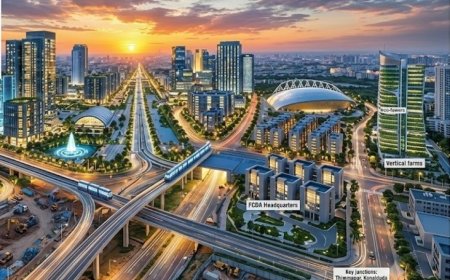
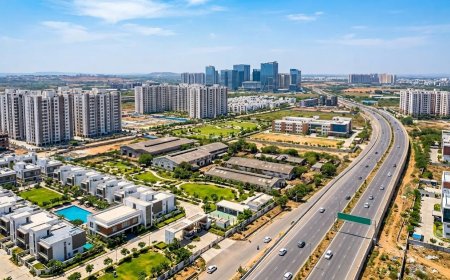
Hyderabad’s commercial real estate market is expanding beyond the traditional HITEC City–Gachibowli corridor, driven by GCCs, technology companies, data centres, retail demand and improved connectivity.
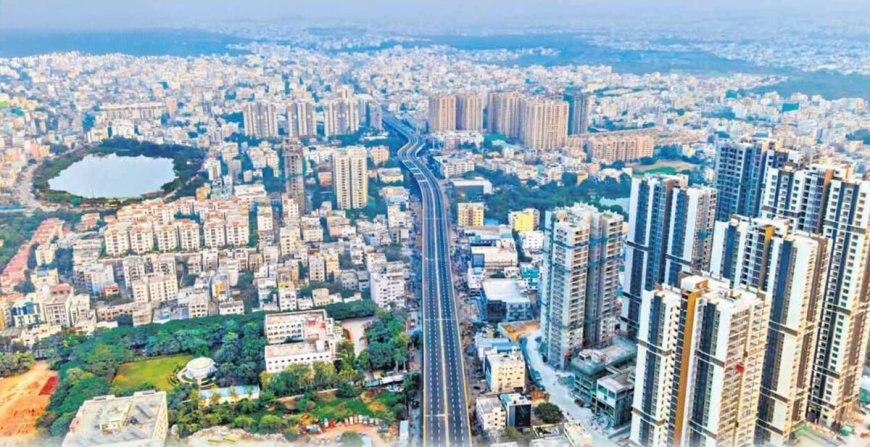
GCCs, technology and retail demand expand the city’s business footprint
property pulse
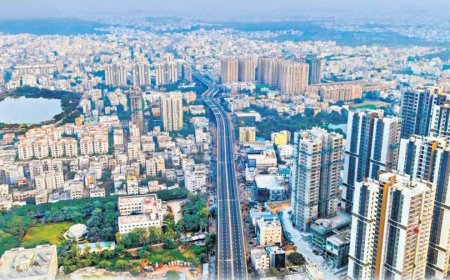
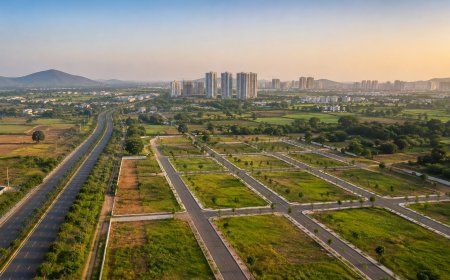
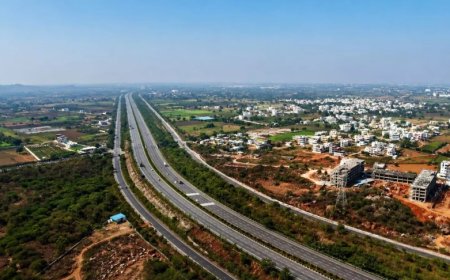
Hyderabad’s commercial real estate market is expanding beyond its established HITEC City-Gachibowli core, with infrastructure development and corporate demand supporting the emergence of newer business corridors.
Global Capability Centres (GCCs), technology companies, data centres and retail are contributing to this expansion, while improved connectivity is encouraging businesses and developers to look beyond traditional office districts.
According to CBRE, office space absorption across India reached 45.5 million sq ft during the first half of 2026, underlining continued demand for commercial space despite a changing global economic environment.
New locations gain traction
Hyderabad’s established western business districts continue to anchor office demand, but the expansion of employment centres and supporting infrastructure is creating opportunities in newer locations.
Developers are also responding with commercial and mixed-use projects designed around evolving corporate requirements.
GCCs remain a key demand driver
Hyderabad has strengthened its position as a major GCC and technology destination in South India. Global enterprises and technology companies continue to use the city for functions spanning technology, engineering, analytics, digital operations and other specialised services.
The growth of artificial intelligence, cloud computing and digital services is also supporting demand for specialised commercial infrastructure, including data centres.
For office developers, the presence of a large technology and GCC ecosystem provides a base of occupier demand beyond conventional business services.
Retail follows employment growth
Retail is increasingly following the expansion of residential and employment centres. National retail leasing reached 3.9 million sq ft during H1 2026, up 20 per cent year-on-year, with Hyderabad among the major markets contributing to leasing activity.
As new residential communities and employment hubs develop, demand is also emerging for shopping, food and entertainment facilities closer to these catchments.
This is encouraging a broader commercial development pattern in which offices, retail and residential projects increasingly develop around common infrastructure networks.
BUSINESS SPREAD.
• India absorbed 45.5 million sq ft.
• Retail leasing reached 3.9 million sq ft.
• Retail demand grew 20 per cent.
• GCCs remain key office demand drivers.
• Data centres add specialised commercial demand.
• New corridors seek stronger connectivity networks.
• Mixed-use projects support emerging business hubs.
What's Your Reaction?
 Like
0
Like
0
 Dislike
0
Dislike
0
 Love
0
Love
0
 Funny
0
Funny
0
 Angry
0
Angry
0
 Sad
0
Sad
0
 Wow
0
Wow
0