
























Flat Owners Cannot Prevent Another Society from Using Common Facilities
The Karnataka High Court has ruled that flat owners cannot stop residents of another apartment project from using common facilities when the registered sale deed explicitly permits shared access.

Karnataka High Court Clarifies
The Karnataka High Court has ruled that flat owners in an apartment project cannot prevent residents of another society from using common amenities, provided the registered sale deed clearly states that residents of other phases can also access those facilities. A division bench comprising Justice Jayant Banerji and Justice Tara Vitasta Ganju delivered the ruling.
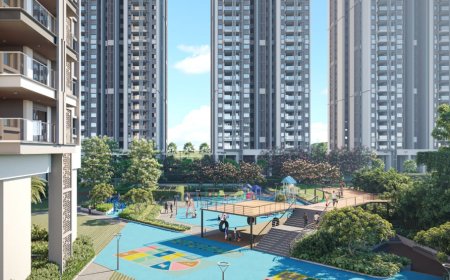
In Bengaluru’s Kothanur village, the same developer had developed two projects—Arya Hamsa and Arya Hamsa Grande. Although the two projects had separate approvals, joint development agreements and landowners, certain common facilities—including the clubhouse, roads, access routes, and entry and exit gates—were designed for use by residents of both projects.
Arya Hamsa was completed in 2015 and received its occupancy certificate. The adjoining Arya Hamsa Grande was developed later. When residents of the second project began using the common facilities, flat owners of the first project objected and questioned how another society could be allowed to use amenities meant for their project.
The residents initially approached the Karnataka RERA Authority, seeking cancellation of Arya Hamsa Grande’s registration and action against the developer. RERA rejected their claims. Their appeal before the Karnataka RERA Appellate Tribunal also failed, following which they approached the High Court. The High Court dismissed their petition as well.
The Sale Deed Clause Was Crucial
The key issue in the case was the registered sale deed executed by the flat owners on November 3, 2015. The court noted that the document specifically stated that common facilities, roads, the clubhouse and recreational amenities could be used by owners from different phases of the development. Therefore, the court held that the flat owners could not prevent residents of another society from using those facilities in violation of the registered sale deed.
The High Court observed that while a flat purchaser has exclusive rights over their individual apartment, they do not enjoy the same absolute rights over common areas and facilities such as clubhouses. The court also rejected the argument that the provision permitting shared use of common facilities was invalid under Section 11 of the Transfer of Property Act.
The flat owners further argued that the shared-use clause was unclear and therefore invalid under Section 29 of the Indian Contract Act. The High Court rejected this contention too, holding that since the sale deed was a registered and valid document, its contractual provisions could not simply be ignored.
What's Your Reaction?
 Like
0
Like
0
 Dislike
0
Dislike
0
 Love
0
Love
0
 Funny
0
Funny
0
 Angry
0
Angry
0
 Sad
0
Sad
0
 Wow
0
Wow
0