










20% Cut in Water Use Could Save 100 MGD, Builders Seek Stronger Groundwater Recharge
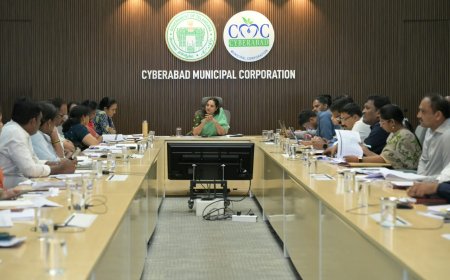
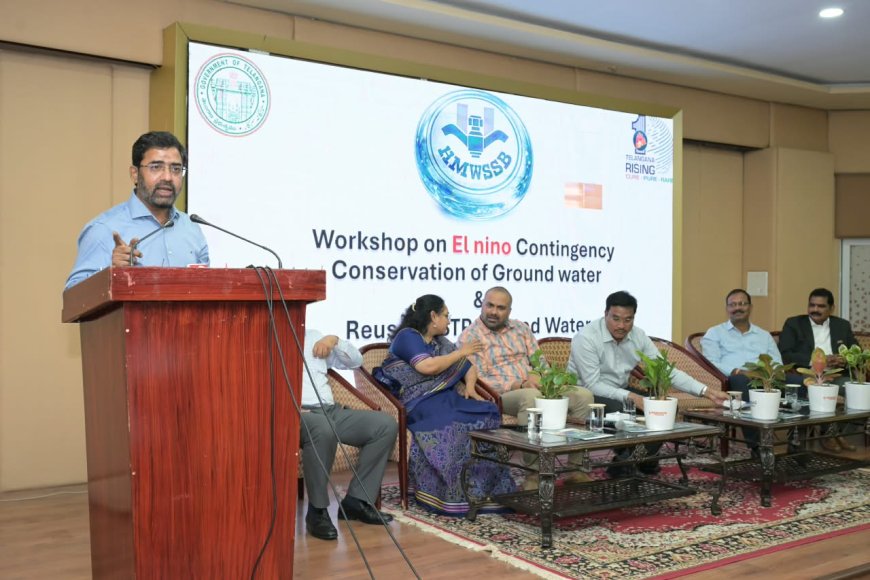
HMWSSB MD, GHMC, CMC and MMC commissioners, along with HYDRAA chief and real estate industry representatives, discussed water conservation, groundwater recharge and treated-water reuse at the El Niño contingency workshop.
SAMUEL JOSHUA
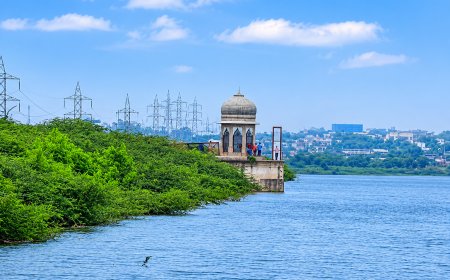
Hyderabad: Hyderabad is heading into the coming months with concerns over water availability, as the Manjeera-Singur reservoirs run low and groundwater recharge remains below last year's levels. Even the recent cyclones brought little rain to replenish these sources. With limited scope to draw more water, the water board is exploring alternatives and urging residents, builders, industries and RWAs to promote conservation and reduce consumption.
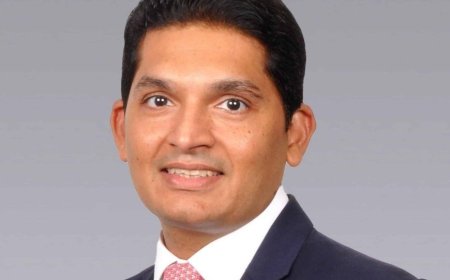
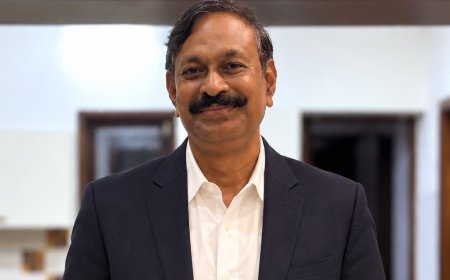
“We are facing a serious water shortage, and we cannot depend on the existing sources alone. We have to explore additional sources, reduce consumption and make every drop count. Groundwater recharge and the reuse of treated water are equally important. We have to be prepared to manage this situation over the next five to six months,” said K. Ashok Reddy, Managing Director, Hyderabad Metropolitan Water Supply and Sewerage Board (HMWSSB).
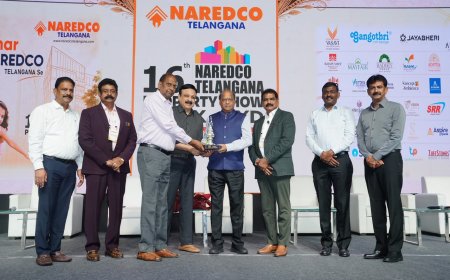
Addressing a workshop on El Niño contingency organised by NAREDCO Telangana and CREDAI Hyderabad at the Dr MCR HRD Institute of Telangana, Ashok Reddy added that the board currently supplies 560–570 million gallons a day (MGD) from six sources. This supply has remained almost unchanged since Godavari Phase I and Krishna Phase III were completed in 2015, despite the city's expansion and population growth.
Manjeera and Singur have received almost no flood inflows this year. Emergency pumping is being undertaken, but the available water from these sources may last only another 50–55 days. Groundwater levels have also declined across western, eastern and southern Hyderabad compared with last year, due to poor rainfall and inadequate recharge.
To address an estimated 100 MGD water shortage, HMWSSB expects to secure an additional 40 MGD from the Godavari through a pending scheme and is exploring another 50–60 MGD from alternative sources. Ashok Reddy said reducing consumption by 20% could help save around 100 MGD, making water conservation an important part of the contingency plan.
The board has also started supplying treated wastewater from 30 sewage treatment plants (STPs) through green tankers for landscaping and other non-domestic purposes. It plans to make treated-water reuse mandatory for construction activities and landscaping over the next eight months. Ashok Reddy also urged residential communities to make greater use of harvested rainwater and treated wastewater for all purposes other than drinking.
Related: HMWSSB Rolls Out Green Water Tankers, 100 Tankers Register
Water Conservation Concerns Raised
K. Sreedhar Reddy, President, NAREDCO Telangana, appreciated the Government and civic authorities for engaging with the industry and stressed the need for early preparedness and continued collaboration. He requested for injection borewells in waterlogging-prone areas, pointing out that rainwater-harvesting pits without injection borewells were less effective. He specifically highlighted waterlogging near Road No. 1 in Banjara Hills and Vengal Rao Park, suggesting that recharge structures around the park lake could improve groundwater levels.
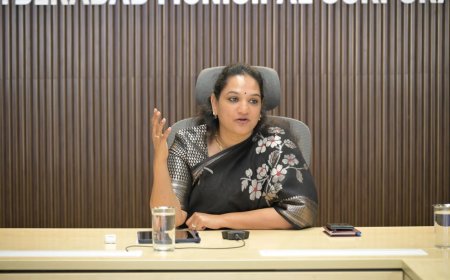
Responding to the suggestion, Cyberabad Municipal Corporation Commissioner G. Srijana said the corporation is implementing modular rainwater-harvesting structures combined with injection borewells in parks and public spaces, based on a model studied in Coimbatore. She added that the initiative will be extended to more wards and invited gated communities, large apartment complexes and colony welfare associations to participate, offering demonstrations and subsidised installations.
A builder shared an example of three borewells on agricultural land becoming operational after rainwater was channelled through percolation pits over two years. He offered to demonstrate the approach to other developers.
Another builder appreciated HYDRAA’s ongoing action against illegal borewells in Tellapur and Nallagandla but pointed out that such issues persist in several other areas as well. He urged HYDRAA Commissioner A.V. Ranganath to look into the matter and intensify enforcement against illegal groundwater extraction. He also noted that gated communities in Tellapur and Nallagandla are undertaking rainwater-harvesting and STP initiatives, with experts inspecting the facilities.
Participants also sought the removal of obstructions in interconnected lakes to restore water flow and improve groundwater recharge. Another suggestion was to establish direct treated-water pipelines from nearby STPs to construction sites, reducing dependence on tankers.
In response, Ashok Reddy asked builders to submit proposals with details of nearby projects and their requirements, saying the HMWSSB would consider pipeline connections wherever the distance and cost made them viable.
Former NAREDCO Telangana president Vijay Sai Meka pointed out that high electricity tariffs were discouraging resident welfare associations from operating STPs and sought a suitable tariff revision.
Meanwhile, another participant, Prahalad, highlighted water wastage through RO purification systems, pointing out that nearly twice the quantity of water is used to produce drinking water. He also suggested adopting dual-flush toilets, which allow users to use half the tank’s water for flushing while conserving the remaining water for the next use.
Also Read: Hyd High-Rises: Time to Work on Water Usage Plans
What's Your Reaction?
 Like
0
 Dislike
0
 Love
0
 Funny
0
 Angry
0
 Sad
0
 Wow
0