






















India’s Warehousing Market Records 16.2% Growth in Net Absorption in 9M 2026
India’s warehousing sector recorded a 16.2% year-on-year growth in net absorption, reaching 49.5 million sq. ft. across the top eight cities during the first nine months of 2026, according to ANAROCK.
Mumbai: India’s warehousing and industrial real estate market continued to expand in the first nine months of 2026, with net absorption across the top eight cities rising 16.2% year-on-year to 49.5 million sq ft, compared with 42.6 million sq ft during the corresponding period in 2025. Cumulative net absorption between 2021 and 9M 2026 reached 266.5 million sq ft, reflecting strong occupier demand over the past five years.
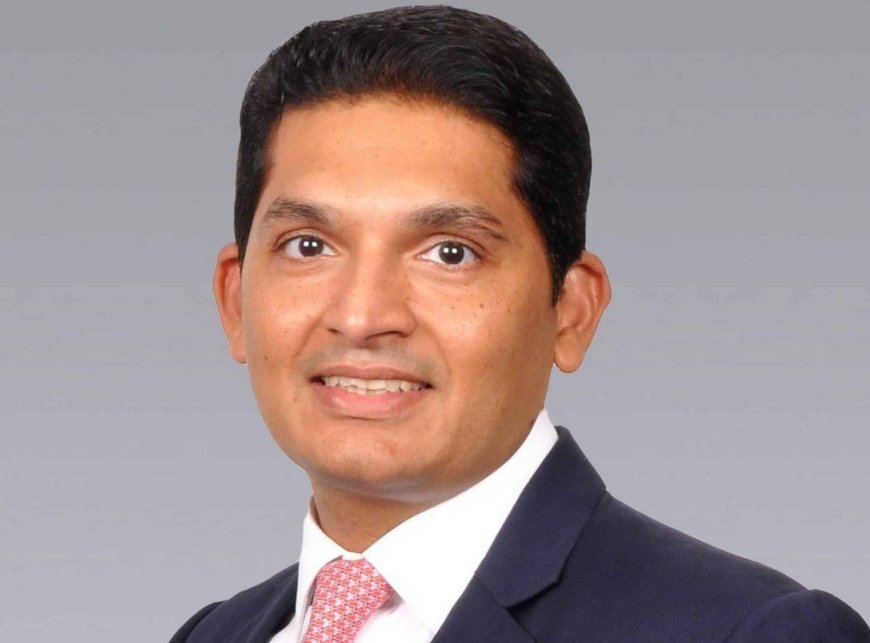
Peush Jain, Managing Director (Commercial Leasing & Advisory), ANAROCK Group, said the numbers were encouraging, but India's warehousing growth remained concentrated in a few markets. Rental appreciation and vacancy levels also varied significantly across cities. NCR, MMR, and Pune together accounted for nearly 58% of the cumulative absorption across the top eight cities.
NCR led with a 21.8% share, followed by MMR at 18.5% and Pune at 17.4%. Pune has overtaken Bengaluru, which accounted for 15.1% of the cumulative absorption. Chennai and Kolkata accounted for 10.7% and 7.7%, respectively, while Hyderabad and Ahmedabad each accounted for 4.4%.
Also Read: Apartment Management Requires Cooperation, Not Criticism
NCR Leads Rental Appreciation
The national average monthly warehousing rent across the top eight cities stood at ₹28.1 per sq ft in Q3 2026, marking a 27% increase since 2021.
NCR recorded the highest rental appreciation among the eight cities. According to Jain, average monthly rents in the region rose from ₹22.2 per sq ft in 2021 to ₹33 per sq ft in Q3 2026, a 49% increase. While rents grew by just 3% between 2021 and 2023, they increased sharply by 44% from 2023 to Q3 2026.
MMR continued to command the highest average rent at ₹43.9 per sq ft per month, more than twice Ahmedabad's ₹19 per sq ft, the lowest among the eight markets. Hyderabad, MMR and Bengaluru recorded rental increases of 30% or more since 2021. Pune, Chennai, and Ahmedabad saw relatively moderate appreciation of 17%, 19% and 20%, respectively.
The national vacancy rate stood at 7.9% as of 9M 2026, indicating varying levels of supply availability across markets despite demand growth. Pune recorded the lowest vacancy at 6.8%, followed by Chennai and Kolkata at 7.1% each, NCR at 7.3% and MMR at 7.6%. Bengaluru reported the highest vacancy at 11.5%, followed by Ahmedabad at 11% and Hyderabad at 9.2%.
Interestingly, Bengaluru's relatively high vacancy coexisted with a 30% increase in rents since 2021. Pune, despite having the tightest market, recorded the slowest rental growth.
Jain said this highlighted the role of factors beyond vacancy in determining rental performance, including the quality and location of available stock, occupier requirements and the nature of industrial activity in each market.
Also Read: Emaar India launches second premium tower in Lucknow
Sectoral Demand Reflects Distinct Specialisations
At the national level, third-party logistics (3PL) accounted for 26% of warehousing demand, followed by manufacturing at 22% and the automotive sector at 10%. Together, 3PL and manufacturing contributed nearly 50% of the total demand, highlighting the importance of logistics networks and industrial activity in shaping the sector.
However, individual cities showed distinct demand patterns. MMR remained strongly logistics-oriented, with 3PL accounting for 40% of its warehousing demand.
Pune's demand was driven by manufacturing and automotive activity, which contributed 32% and 22%, respectively. The city accounted for 37% of the total automotive-sector warehousing absorption across the top eight cities between 2021 and Q3 2026.
Chennai's industrial ecosystem was reflected in the electronics segment, which accounted for 14% of its warehousing demand, the highest share in this category among the eight cities.
Hyderabad remained more manufacturing-led, with the sector contributing 31% of its demand. The 3PL segment accounted for just 13%, the lowest share among the markets analysed.
Highlights:
- Kolkata is also a logistics-oriented market, with 3PL contributing 36% of its demand
- NCR has a more diversified demand profile led by 3PL at 26%, manufacturing at 17% and retail at 13%
- Ahmedabad’s demand comes from 3PL, manufacturing and automotive occupiers, which contribute 28%, 22% and 21%, respectively
- 42.6 million sq. ft. of net warehousing absorption recorded across the top 8 cities in 9M 2025
- 266.5 million sq. ft. of cumulative net leasing recorded across the top 8 cities between 2021 and 9M 2026
- Pune overtakes Bengaluru to become India's third-largest warehousing market, with a 17.4% cumulative absorption share, compared to Bengaluru's 15.1%
- NCR, MMR and Pune together account for nearly 58% of cumulative warehousing absorption since 2021
- NCR leads rental growth, with average warehouse rents rising 49% to ₹33 per sq ft per month in 9M 2026
- National warehousing vacancy stands at 7.9%. Pune records the lowest vacancy at 6.8%, while Bengaluru has the highest at 11.5%
- 3PL and manufacturing sectors together contribute 48% of India's total warehousing demand: rewrite each point in my style
Also Read: Focus on First-Time Buyers, Say Experts
What's Your Reaction?
 Like
0
 Dislike
0
 Love
0
 Funny
0
 Angry
0
 Sad
0
 Wow
0