
























Hyd realty faces a growing buyer disconnect
Rising prices and swelling inventory test homebuyer appetite
PROPERTY PULSE | HYDERABAD
King Johnson Koyyada
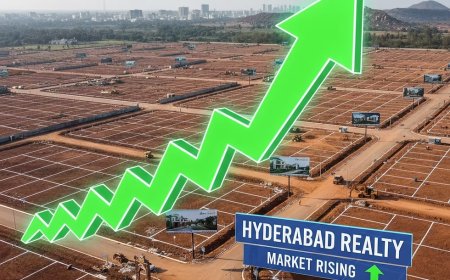
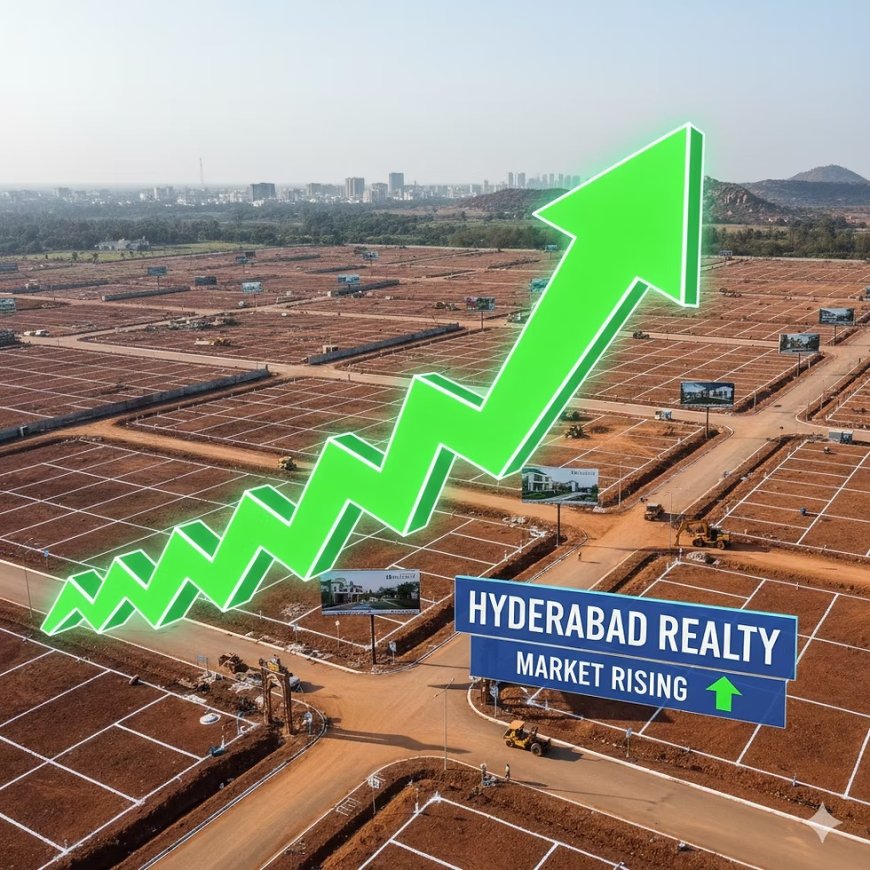
Hyderabad’s residential market is facing an uncomfortable question: where have the homebuyers gone? After years of strong growth driven by IT employment, infrastructure expansion and rising urban demand, the market is showing signs of caution. Developers and property consultants are reporting slower enquiries, fewer site visits and weaker booking conversions in some segments.
The concern is not simply about sales momentum. Rising property prices, growing unsold inventory and increasing financial commitments are making buyers more selective. The key question is whether this represents a temporary pause or a more prolonged correction.
Affordability hurdle
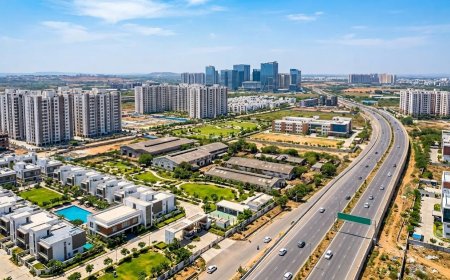
One of the biggest challenges is the widening gap between property prices and household purchasing power. Locations such as Kokapet, Neopolis, Narsingi, Tellapur and the Financial District have seen a growing concentration of premium residential projects. A 3BHK apartment in several western Hyderabad locations can cost ₹1 crore to ₹2 crore or more.
For salaried professionals and young families, the purchase involves more than the down payment. EMIs, registration charges, interiors and maintenance add to the financial burden. Even buyers eligible for large home loans may be reluctant to commit a substantial share of their income for decades.
The growing emphasis on luxury developments also raises questions about the availability of quality homes in the ₹50 lakh–₹80 lakh and ₹80 lakh–₹1 crore categories.
Inventory and supply concerns
Supply and absorption figures underline the challenge. According to the CRE Matrix–CREDAI Hyderabad report, developers launched 49,656 residential units in H1 2026, while sales stood at 26,068 units. Unsold inventory rose to 1,42,722 units, with an estimated inventory overhang of around 29 months.
The average ticket size of homes sold during H1 2026 increased to ₹2.03 crore from ₹1.85 crore in the corresponding period of 2025. While this points to higher-value transactions, it does not necessarily indicate stronger affordability across the broader buyer base.
West Hyderabad accounted for approximately 67 per cent of new residential supply and 61 per cent of housing sales in Q3 2026, according to ANAROCK. The concentration of projects in this corridor makes micro-market performance particularly important.
Buyers turning cautious
Higher EMIs, uncertainty over employment and changing investment priorities may be prompting prospective buyers to postpone purchases. Hyderabad's dependence on its IT, ITES and GCC workforce makes employment confidence an important factor in housing demand. Investors, meanwhile, are likely to assess property prices against rental yields and potential appreciation more carefully.
Some buyers may also prefer ready-to-move homes, which offer greater certainty on possession, construction quality and the surrounding infrastructure. Project delivery and developer credibility are equally important. Buyers committing ₹1 crore or more increasingly seek clarity on approvals, RERA compliance, construction progress, promised amenities and possession schedules.
Cash-flow pressure
Slower bookings can affect developers' cash flows, particularly those with substantial land, construction and financing commitments. Delayed collections can put pressure on payments to contractors and suppliers, as well as project execution. However, the extent of such stress needs to be assessed independently rather than generalised across the industry.
Developers face a difficult choice: protect project margins or offer more attractive pricing and payment terms to revive demand. Significant price reductions may be difficult for projects with high land and construction costs, but buyers are increasingly comparing options and negotiating for better value.
Hyderabad retains its long-term advantages, including its employment base, infrastructure pipeline and expanding urban economy. Yet the next phase of residential growth will depend on a better balance between supply, pricing and purchasing power.
The central issue may not be a shortage of projects, but a growing gap between what developers are offering and what homebuyers are willing and able to afford. The industry will need to respond with realistic pricing, disciplined launches, timely delivery and greater transparency if it wants to bring buyers back into the market.
HOUSING MARKET
- 49,656 homes launched in H1 2026.
- Sales stood at 26,068 units.
- Unsold inventory reached 1.43 lakh homes.
- Inventory overhang estimated at 29 months.
- Average ticket size rose to ₹2.03 crore.
- West Hyderabad dominated new residential supply.
What's Your Reaction?
 Like
0
 Dislike
0
 Love
0
 Funny
0
 Angry
0
 Sad
0
 Wow
0