




























Musi river shaped Hyderabad’s historic growth and identity
Hyderabad real estate growth is deeply linked to the Musi River, which shaped the city’s history since 1591. Explore its role in urban development, cultural identity and future riverfront revival plans.
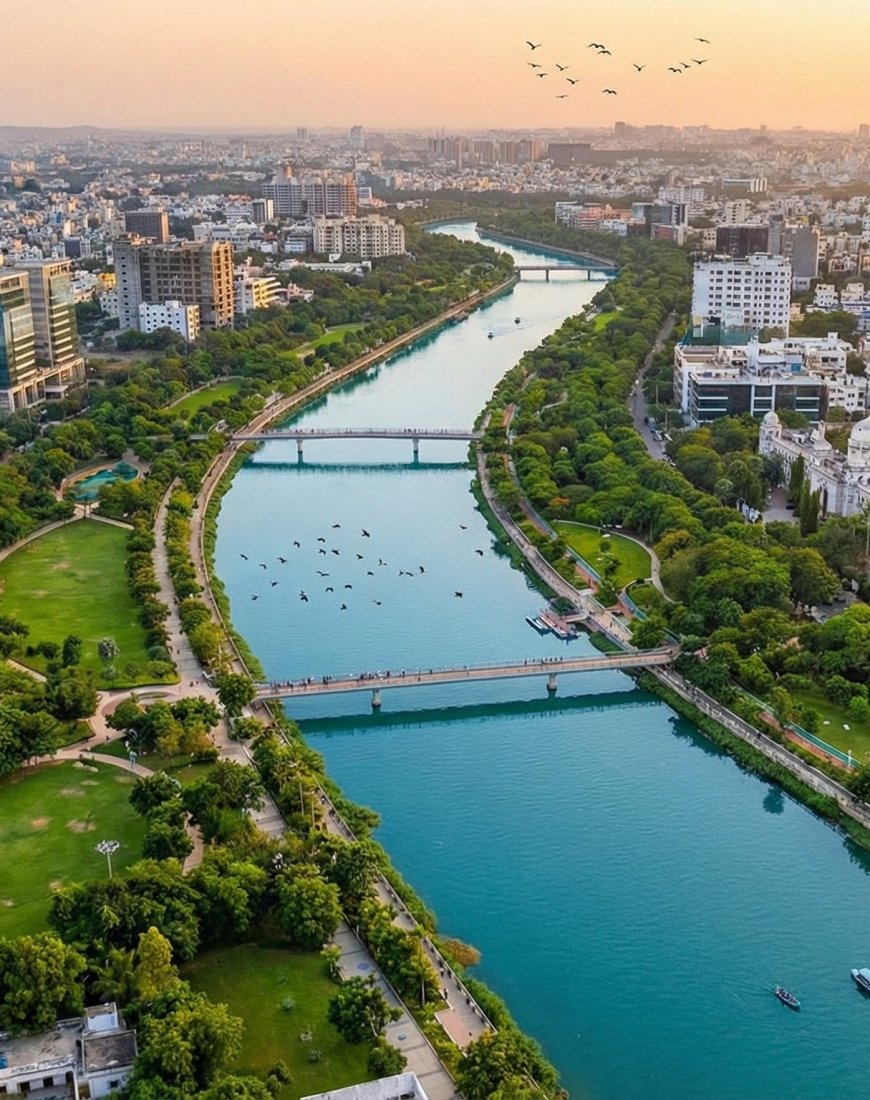
The Musi has played a central role in shaping the history and development of Hyderabad since the city’s founding in 1591 under the Qutb Shahi dynasty.
According to the Musi riverfront development presentation, the city grew along the banks of the river, which served as a vital source of water for agriculture, trade and everyday life. For over three centuries, the Musi functioned as the ecological backbone of Hyderabad, supporting settlements and economic activity across the region.
Originating in the Ananthagiri Hills, the Musi flows for about 240 km before joining the Krishna river, linking key water systems in Telangana. Within Hyderabad, the river runs for approximately 55 km, passing through the heart of the city and influencing its spatial growth and urban character.
Historical records and archival photographs show that the river once defined the city’s landscape, with communities and infrastructure evolving along its course. Over time, however, rapid urbanisation altered this relationship, reducing the river’s role in daily life.
Urban expansion, coupled with changing land-use patterns, gradually transformed the Musi from a lifeline into a neglected urban waterway. Despite this shift, the river continues to hold historical and cultural significance for Hyderabad.
Planners say the current Musi rejuvenation initiative seeks to restore this historic connection by repositioning the river as a central feature of the city’s future development.
What's Your Reaction?
 Like
0
Like
0
 Dislike
0
Dislike
0
 Love
0
Love
0
 Funny
0
Funny
0
 Angry
0
Angry
0
 Sad
0
Sad
0
 Wow
0
Wow
0