

























Buying vs renting: Which one is better for you
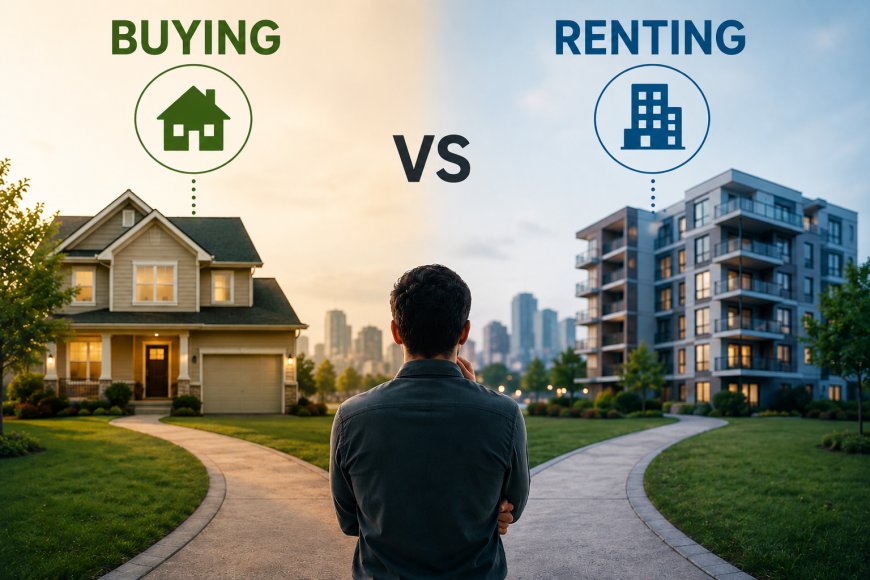
The choice between buying and renting a home remains one of the most debated financial decisions. While ownership offers long-term security, renting provides flexibility and liquidity. A simple 10-year comparison shows how both paths can lead to different outcomes.
Consider two typical choices. One buyer purchases a Rs 80 lakh home with a Rs 16 lakh down payment and a Rs 64 lakh loan at 8.5 per cent interest. The EMI works out to about Rs 55,000 per month.
In contrast, a renter pays Rs 18,000 per month, with an annual increase of around 5 per cent. Instead of buying, the renter invests the Rs 16 lakh down payment and the monthly savings into financial assets.
How the numbers play out over 10 years
For the buyer:
- Total EMI paid: About Rs 66 lakh.
- Outstanding loan: Rs 42 lakh.
- Property value (5 per cent annual growth): Rs 1.3 crore.
Net equity: About Rs 88 lakh
For the renter:
- Total rent paid: About Rs 27 lakh.
- Rs16 lakh investment grows to about Rs 41 lakh.
- Monthly savings invested grow to Rs 76 lakh
Total wealth: Rs 1.17 crore
On paper, the renter appears to be ahead financially.
What the numbers do not capture
The comparison changes when non-financial factors are considered.
Stability vs flexibility
Ownership offers long-term security. Renting allows mobility and easier lifestyle changes.
Costs
Homeowners incur maintenance, repairs and society charges. Renters typically do not.
Emotional value
Owning a home brings a sense of permanence. Renting offers freedom without long-term commitment.
Market risks
Property prices may not always rise steadily. Financial investments also carry risks.
Buying works better when
- The holding period is long (10+ years).
- Property prices are rising.
- EMI is close to rent.
- Stability is a priority
Renting is more suitable when.
- Job mobility is high.
- Property prices are high or stagnant.
- Investments can be managed well.
- Liquidity and flexibility are important.
A practical rule of thumb
- If annual rent is less than 3 per cent of property value → renting is more efficient
- If annual rent is above 5 per cent → buying becomes more viable
The comparison shows that renting, when combined with disciplined investing, can match or even exceed the financial outcome of buying. At the same time, ownership delivers stability and long-term control over living space.
The decision is not purely financial. It depends on income stability, lifestyle preference, location and long-term plans.
In practice, both paths can work. The key lies in understanding the trade-offs and choosing what aligns with individual priorities.
Decision Guide
- Renting offers flexibility and liquidity.
- Buying provides stability and long-term control.
- Maintenance costs impact ownership returns.
- Choice depends on lifestyle and financial discipline.
What's Your Reaction?
 Like
0
Like
0
 Dislike
0
Dislike
0
 Love
0
Love
0
 Funny
0
Funny
0
 Angry
0
Angry
0
 Sad
0
Sad
0
 Wow
0
Wow
0