





























Keep wooden furniture safe during the monsoon
Monsoon humidity can cause wooden furniture to swell, warp, develop mould and attract termites. Simple preventive measures can significantly reduce moisture damage and extend furniture life.
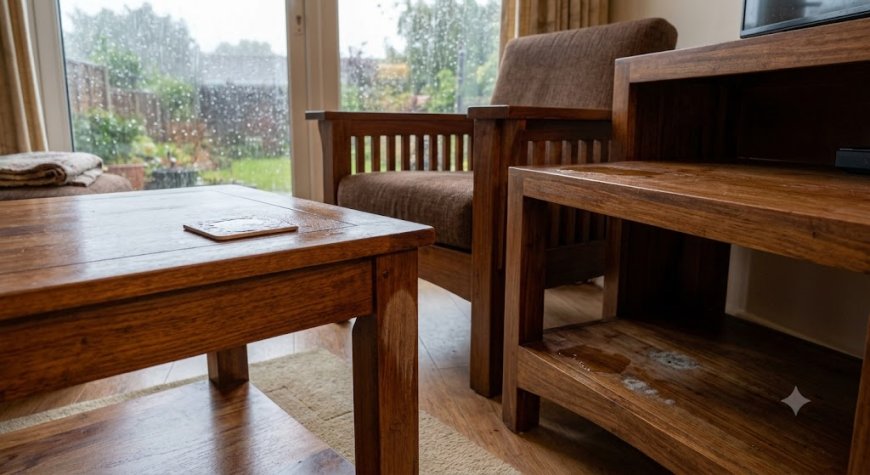
Simple maintenance can prevent moisture damage and extend furniture life
Property Pulse
The monsoon brings welcome relief from the summer heat, but the accompanying humidity can take a toll on wooden furniture. Excess moisture causes wood to expand, warp and develop fungal growth, while damp conditions also increase the risk of termite infestation.
With a few preventive measures, homeowners can protect their furniture and avoid expensive repairs.
One of the most effective ways to minimise moisture damage is to keep furniture away from damp walls and leaking windows.
Experts recommend maintaining a gap of at least three to four inches between wooden furniture and exterior walls to allow air circulation. Rooms should be well ventilated using fans, exhaust fans or air conditioners, while windows can be opened on dry days to improve airflow.
In areas with consistently high humidity, dehumidifiers or silica gel packs can help absorb excess moisture.
Cleaning practices also play an important role. Wooden furniture should never be wiped with a wet cloth, as moisture can seep into the surface and weaken the wood over time.
Instead, use a soft, dry cloth for regular dusting and immediately wipe away any accidental spills or dampness. Applying a fresh coat of polish, wax or varnish before the monsoon creates a protective layer that helps prevent moisture absorption while preserving the finish.
Furniture legs should also be protected from wet floors after mopping by using rubber or felt pads to reduce direct contact with moisture. The rainy season also creates favourable conditions for termites and fungus. Homeowners should regularly inspect furniture joints, corners and undersides for wood dust, tiny holes or signs of mould.
Early detection and timely pest-control treatment can prevent extensive damage. Everyday habits can also make a difference. Avoid placing hot cups, wet glasses or plant pots directly on wooden surfaces, as they may leave stains, cause swelling or damage the finish.
Coasters, trays and protective mats help preserve the surface. Minor cracks and loose joints should be repaired promptly before moisture enters the wood. Solid hardwoods such as teak, sheesham and acacia generally withstand humid conditions better than engineered wood products such as MDF and particle board.
Furniture Care
- Keep furniture 3–4 inches away from damp walls.
- Apply polish, wax or varnish before the monsoon.
- Use a dry cloth; avoid cleaning with a wet cloth.
- Check regularly for termites, fungus and mould.
Use coasters and felt pads to protect wooden surfaces.
What's Your Reaction?
 Like
0
Like
0
 Dislike
0
Dislike
0
 Love
0
Love
0
 Funny
0
Funny
0
 Angry
0
Angry
0
 Sad
0
Sad
0
 Wow
0
Wow
0