
























HILT Policy Is About Clean Air, Water and Future Generations, Not Just Land Use: Minister D. Sridhar Babu
HILT Policy Is About Clean Air, Water and Future Generations, Not Just Land Use: Minister D. Sridhar Babu
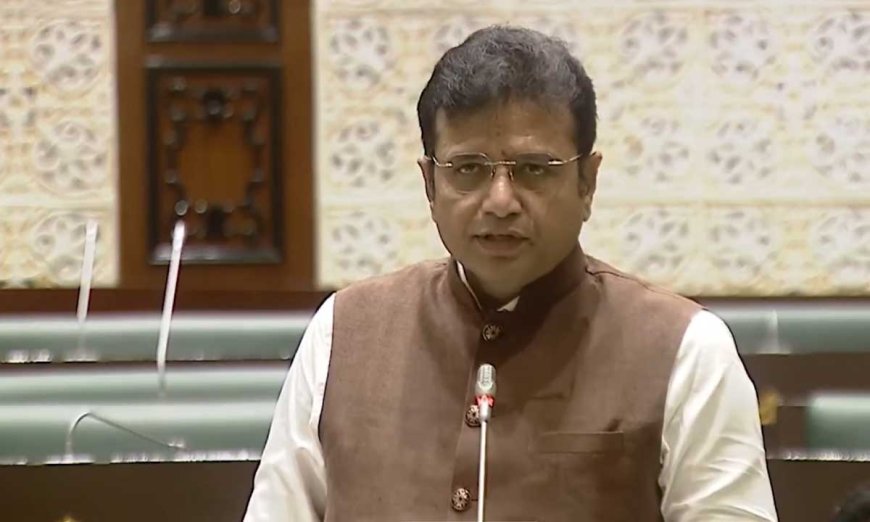
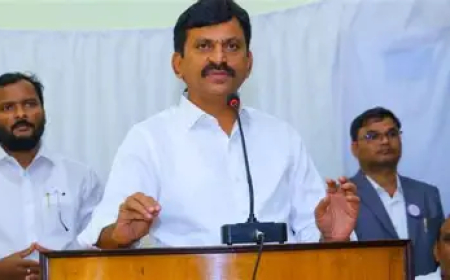
Defending the Hyderabad Industrial Land Transformation (HILT) Policy in the Telangana Legislative Assembly, Minister D. Sridhar Babu said the policy is a historic step aimed at safeguarding clean air, safe water, and a healthy environment for future generations, rather than a mere exercise in land-use conversion or revenue generation.
The Minister observed that while humanity boasts of technological progress and development, modern civilisation has failed to guarantee the most basic human rights—clean air, uncontaminated water, and safe food. He cautioned that development which destroys ecology ultimately threatens human survival.
Recalling history, Sridhar Babu said earlier generations passed on green fields, clean rivers, and breathable air, and questioned whether the present generation is responsibly preserving that legacy for its children. “We may leave wealth behind, but polluted air and toxic water will render that inheritance meaningless,” he said, likening it to “serving poison in a golden bowl.”
He stressed that wealth is temporary, but environmental destruction is irreversible. “We are not owners of this earth; we are its trustees. Providing a clean environment to future generations is our obligation,” he said, warning that continued neglect could turn Hyderabad into an ecological desert.
Explaining the rationale behind HILT, the Minister said Hyderabad’s industrial journey began in the 1970s when industrial zones such as Balanagar, Sanathnagar, Uppal, Jeedimetla, and Cherlapally were far from residential areas. Over the past five decades, rapid urban expansion has turned these industrial belts into densely populated neighbourhoods, placing factories and homes side by side without buffer zones.
“This is not just a planning failure; it is a scientific recipe for disaster,” he said, citing tragedies such as Bhopal, Visakhapatnam’s LG Polymers gas leak, and Japan’s Minamata disease as stark reminders of the dangers of industries operating near habitations.
Sridhar Babu warned that groundwater in several industrial areas of Hyderabad contains dangerously high levels of heavy metals like lead, mercury, and arsenic, far exceeding permissible limits. Scientific studies, he said, indicate serious risks of long-term health damage and genetic disorders if corrective action is delayed.
“If we fail to act now, Hyderabad will inevitably follow Delhi’s path of extreme pollution,” he cautioned, urging legislators to think beyond politics and focus on public health.
Drawing global parallels, the Minister cited London’s Great Smog of 1952, which led to the world’s first Clean Air Act and relocation of industries outside the city, eventually restoring the River Thames. He also referred to China’s Blue Sky Protection Plan, under which thousands of industries were shifted, resulting in a 30–40% reduction in pollution levels within five years.
The Minister clarified that HILT is rooted in established legal principles, including Supreme Court rulings under Article 21, the Precautionary Principle, and the Polluter Pays Principle. He emphasised that citizens should not be forced to pay with their health for pollution caused by industries.
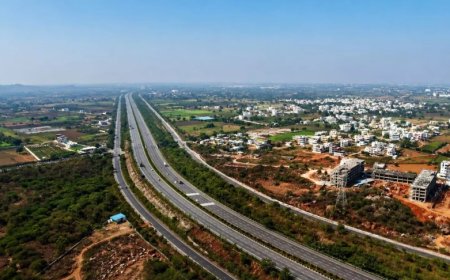
He said the government supports industrial growth but insists that public health cannot be compromised. Facilities will be provided beyond the Outer Ring Road to enable smooth relocation, and the government is open to dialogue with industrial stakeholders.
Rejecting allegations by BRS and BJP leaders that land is being sold cheaply, Sridhar Babu said the claims are baseless and misleading. He pointed out that previous governments granted freehold rights over leased government lands and attempted similar transfers under earlier policies.
The HILT policy, he clarified, was framed after extensive consultations with experts and industrial associations by a Cabinet Sub-Committee led by Deputy Chief Minister Bhatti Vikramarka. Land conversion under HILT is voluntary, time-bound, and fully transparent, to be processed through the TS-iPASS portal within six months.
“The lands involved belong to industrial owners, not the government. There is no compulsion, no secrecy, and no scope for corruption,” he asserted.
Concluding, Sridhar Babu said HILT is corrective surgery for Hyderabad’s ecological imbalance. “A city cannot gamble with the lungs of its people for economic growth. This policy is about protecting life, restoring balance, and securing the future of our children,” he said.
What's Your Reaction?
 Like
0
Like
0
 Dislike
0
Dislike
0
 Love
0
Love
0
 Funny
0
Funny
0
 Angry
0
Angry
0
 Sad
0
Sad
0
 Wow
0
Wow
0