








From Momentum to Maturity: India’s Luxury Real Estate Outlook 2026
Selective, Resilient, and Quality-Driven: India’s Luxury Housing Outlook for 2026
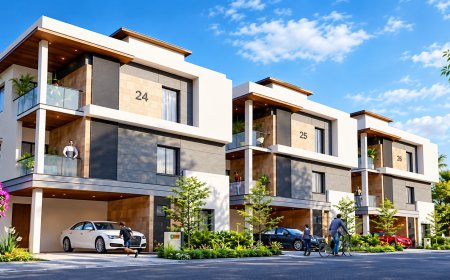
The Luxury Residential Outlook Survey 2026, conducted by India Sotheby’s International Realty (ISIR), points to a year shaped by quiet confidence, underpinned by resilient economic fundamentals, sustained wealth creation, and a more discerning luxury homebuyer.
The survey reflects strong optimism around India’s economic trajectory. Despite global uncertainties, 67% of HNIs and UHNIs remain bullish on India’s growth outlook, while 72% expect GDP growth to stay within the 6–7% range in FY27, signalling continued faith in macroeconomic stability.
Confidence in the real estate market also remains intact. Most respondents plan to maintain or selectively increase their real estate exposure, supported by easing interest rates, improved affordability, and steady end-user demand. While concerns around pricing and supply persist in certain markets, sentiment—particularly in residential and premium housing—remains resilient, indicating a more mature market and disciplined buyer behaviour.
The survey notes that the strong momentum of 2025, marked by record sales from listed developers and marquee transactions across Mumbai, Delhi-NCR, Goa, and Alibaug, has carried into 2026, albeit with greater selectivity. Luxury homebuyers are increasingly prioritising quality, privacy, design excellence, wellness, and service-led living over scale or speculative gains.
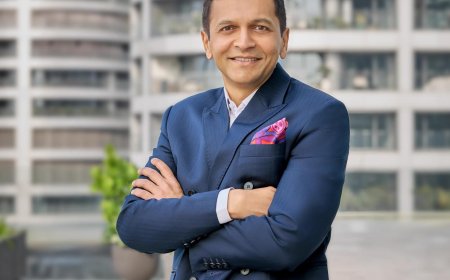
Commenting on the findings, Amit Goyal, Managing Director, India Sotheby’s International Realty, said that 2026 has begun on a foundation of measured optimism following a defining year for India’s luxury real estate market. He highlighted the evolution in buyer composition, with startup founders, next-generation entrepreneurs, and senior professionals joining established business families—supported by strong equity markets and a record IPO cycle. In 2025 alone, 103 Indian corporates raised INR 1.76 lakh crore through IPOs.
“For these buyers, real estate represents permanence—combining capital efficiency, lifestyle value, and generational continuity. Demand is increasingly quality-led, with privacy, design, wellness, and service-driven living shaping a more refined luxury market,” Goyal added.
The survey also underscores India’s robust wealth creation story. Prime urban luxury homes continue to outperform, driven by scarcity and defensibility, while second homes are evolving into lifestyle assets rather than purely investment-driven purchases.
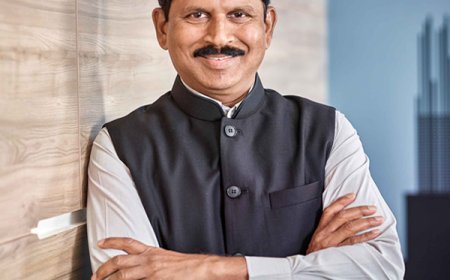
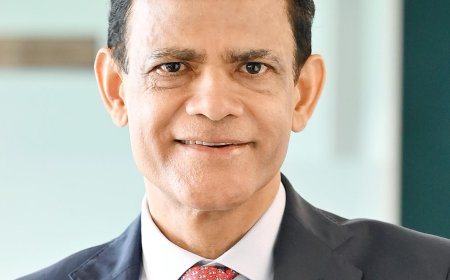
Ashwin Chadha, CEO, India Sotheby’s International Realty, noted that India’s growth and wealth creation have moved in tandem, fuelling a sustained boom in luxury real estate. With over 350 billionaires controlling nearly USD 2 trillion in wealth, demand for bespoke residential assets remains structural rather than cyclical, though momentum is now moderating.
Looking ahead, expectations have softened modestly. Currency volatility has emerged as a key concern, with a growing number of HNIs and UHNIs wary of rupee depreciation and exploring dollar-denominated diversification.
Investment preferences continue to favour equities, followed closely by physical real estate. The rapid adoption of AIFs, REITs, and InvITs has made real assets the largest combined investment pool for wealthy Indians. Over the past two years, real estate purchases have been evenly split between self-use and investment, reflecting a balanced approach to lifestyle enhancement and long-term capital appreciation.
While more than half of respondents expect luxury residential price growth to moderate in FY26–27, investment appetite remains resilient—particularly for city-based luxury homes offering rental yield and long-term value. The survey also highlights a growing trend towards portfolio consolidation and professionalisation, with more investors streamlining holdings and increasingly relying on professional advisors over informal or broker-led decision-making.
What's Your Reaction?
 Like
0
Like
0
 Dislike
0
Dislike
0
 Love
0
Love
0
 Funny
0
Funny
0
 Angry
0
Angry
0
 Sad
0
Sad
0
 Wow
0
Wow
0