


























HILT Policy to Generate ₹10,776 Crore for Telangana, Govt Ready for Probe into All Deals Since 2014: Dy CM Bhatti Vikramarka
HILT Policy to Generate ₹10,776 Crore for Telangana, Govt Ready for Probe into All Deals Since 2014: Dy CM Bhatti Vikramarka
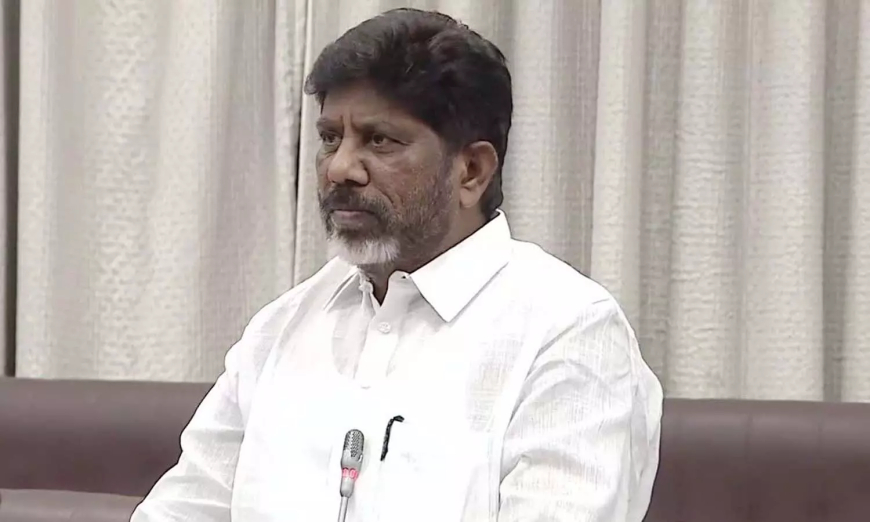
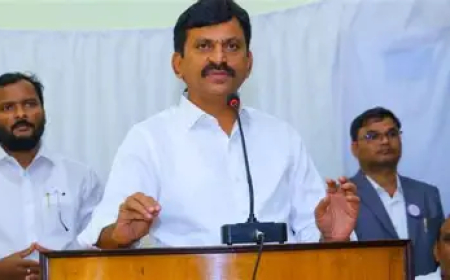
Deputy Chief Minister Bhatti Vikramarka Mallu on Tuesday informed the Telangana Legislative Assembly that the Hyderabad Industrial Land Transformation (HILT) Policy is expected to generate a massive ₹10,776 crore in revenue for the State, while ensuring environmental protection and sustainable urban development of Hyderabad.
Presenting details of the policy, the Deputy Chief Minister said the HILT Policy will be implemented within a six-month timeframe in a fully transparent manner, with uniform rules applicable to all stakeholders. He asserted that the government is prepared to face any inquiry by any agency into all land transactions carried out from 2014 till date, including those under the HILT framework.
Explaining the financial impact, Bhatti Vikramarka said that before the introduction of the HILT Policy, land conversion fetched the State merely ₹12 lakh per acre. Under the new policy, the State will earn nearly ₹7 crore per acre. He pointed out that while the previous government’s freehold and grid policies together generated only ₹574 crore, the HILT Policy alone is designed to bring ₹10,776 crore into the State exchequer.
Responding to criticism from the opposition, the Deputy Chief Minister urged them to stop making irresponsible allegations and “spewing venom” against a policy that strengthens State finances. He said the government is ready to clarify every doubt raised and invited opposition members to submit their concerns in writing.
He rejected allegations of large-scale scams surrounding the policy, stating that such claims were being made without understanding State interests. “Forgetting the State’s welfare, opposition leaders are trying to cover their own failures by making baseless allegations,” he said.
Bhatti Vikramarka said the HILT Policy is not merely a revenue-generation exercise but a long-term urban and environmental safeguard. Polluting industries are being shifted beyond the Outer Ring Road, diesel buses are being phased out of Hyderabad, electric buses are being introduced, and sewage flowing through stormwater drains is being treated via sewage treatment plants.
“Environmental pollution in Hyderabad has reached alarming levels. The city’s Air Quality Index has touched 230, which is a serious warning sign,” he noted, adding that Hyderabad risks facing conditions similar to Delhi if corrective steps are not taken now.
Tracing the history of industrial land use, the Deputy Chief Minister recalled that as early as 1927, during the Nizam’s era, industrial lands were allocated for development. Over the decades, industries were established on leased, government-sold, and private lands, with ownership rights fully resting with industrial managements.
Post bifurcation, he said, three policy decisions were taken regarding these lands, none of which benefitted the State. The previous government, he alleged, granted ownership rights over leased government lands at sub-registrar rates, resulting in losses to the exchequer.
“In contrast, the present government has ensured that even where private ownership exists, the State also receives its rightful financial share,” he said, adding that every rupee collected under the HILT Policy will be delivered back to the people.
He recalled that a Congress government had constituted a committee in 2012 to shift industries out of Hyderabad due to rising pollution, and its report was submitted in 2013. Later, the previous government allowed conversion of industrial parks into IT and commercial zones but failed to attract takers despite offering conversion at 30 per cent above SRO rates.
With Hyderabad’s population crossing 1.3 crore and the city rapidly expanding, Bhatti Vikramarka warned that failure to take decisive policy measures now would amount to injustice to future generations.
“The HILT Policy has been introduced to create a cleaner, more livable Hyderabad while strengthening Telangana’s economy,” he said.
Concluding his address, the Deputy Chief Minister said that while India aims to become a $30 trillion economy by 2047, Telangana too should aspire to become a $3 trillion economy. “Only when States grow will the nation grow,” he said, adding that the government will move forward with determination through its CURE, PURE, and RARE policies to achieve this vision.
What's Your Reaction?
 Like
0
Like
0
 Dislike
0
Dislike
0
 Love
0
Love
0
 Funny
0
Funny
0
 Angry
0
Angry
0
 Sad
0
Sad
0
 Wow
0
Wow
0